
There are green beans, and then there are Southern green beans, and they are barely related. The Southern way is not a quick sauté or a crisp blanch — it is a long, slow simmer in a smoky, savoury broth until the beans turn silky, deep green, and completely tender, drinking in the flavour of bacon and onion the whole time. Baby potatoes simmer in the same pot, soaking up the same broth, until the whole dish becomes one of the most comforting side dishes in the Southern repertoire. The cooking liquid itself — the potlikker — is so good that cornbread is practically required to chase it.
This style of cooking came from farm kitchens where a pot of beans could simmer gently on the back of the stove while the rest of dinner came together, and where a little bacon or a ham hock seasoned a whole pot of vegetables. It is forgiving food: the beans do not need watching, the timing is generous, and the result tastes like it took far more effort and money than it did. A pot like this fed families through summers of garden abundance and winters of making do, and it has never left the Southern table.
The honest difference between this dish and a pot of plain boiled beans is threefold: seasoning meat (bacon here, though ham hock and smoked turkey also have their loyalists), enough time for the beans to go fully tender and silky rather than squeaky, and potatoes that cook in the bean broth so everything tastes of everything else. If you grew up on crisp, bright-green beans, give this version one fair try before you judge — there is a reason it has outlasted every fashion in vegetable cookery.
Serves: 6–8 as a side dish | Prep time: 20 minutes | Cook time: 50–60 minutes | Total time: about 1 hour 20 minutes
Ingredients
- 2 lb (900 g) fresh green beans, trimmed and snapped into 1½–2 inch (4–5 cm) pieces
- 1½ lb (680 g) small waxy potatoes — new potatoes, red potatoes, or baby Yukon Golds — scrubbed and halved (quartered if large)
- 6 slices thick-cut bacon (about 200 g), cut into ½-inch (1.3 cm) pieces — or 1 small smoked ham hock (about 300 g)
- 1 medium yellow onion (about 180 g), diced
- 3 garlic cloves (about 9 g), minced
- 3 cups (720 ml) low-sodium chicken stock or broth (water works too — the bacon seasons it)
- 1 teaspoon (6 g) fine salt, plus more to taste — hold back at first; the bacon and stock are salty
- ½ teaspoon (1.5 g) black pepper, plus more to serve
- ½ teaspoon (1.5 g) garlic powder (optional)
- ¼ teaspoon (0.5 g) crushed red pepper flakes (optional, for a whisper of heat)
- 1 teaspoon (4 g) granulated sugar (optional and traditional in many kitchens — it rounds the beans’ flavour without sweetening them noticeably)
- 1 tablespoon (15 ml) apple cider vinegar, to finish (optional but brightening)
- 1 tablespoon (15 g) unsalted butter, to finish (optional, for gloss)
- Hot sauce, for serving
Choosing and Snapping the Beans
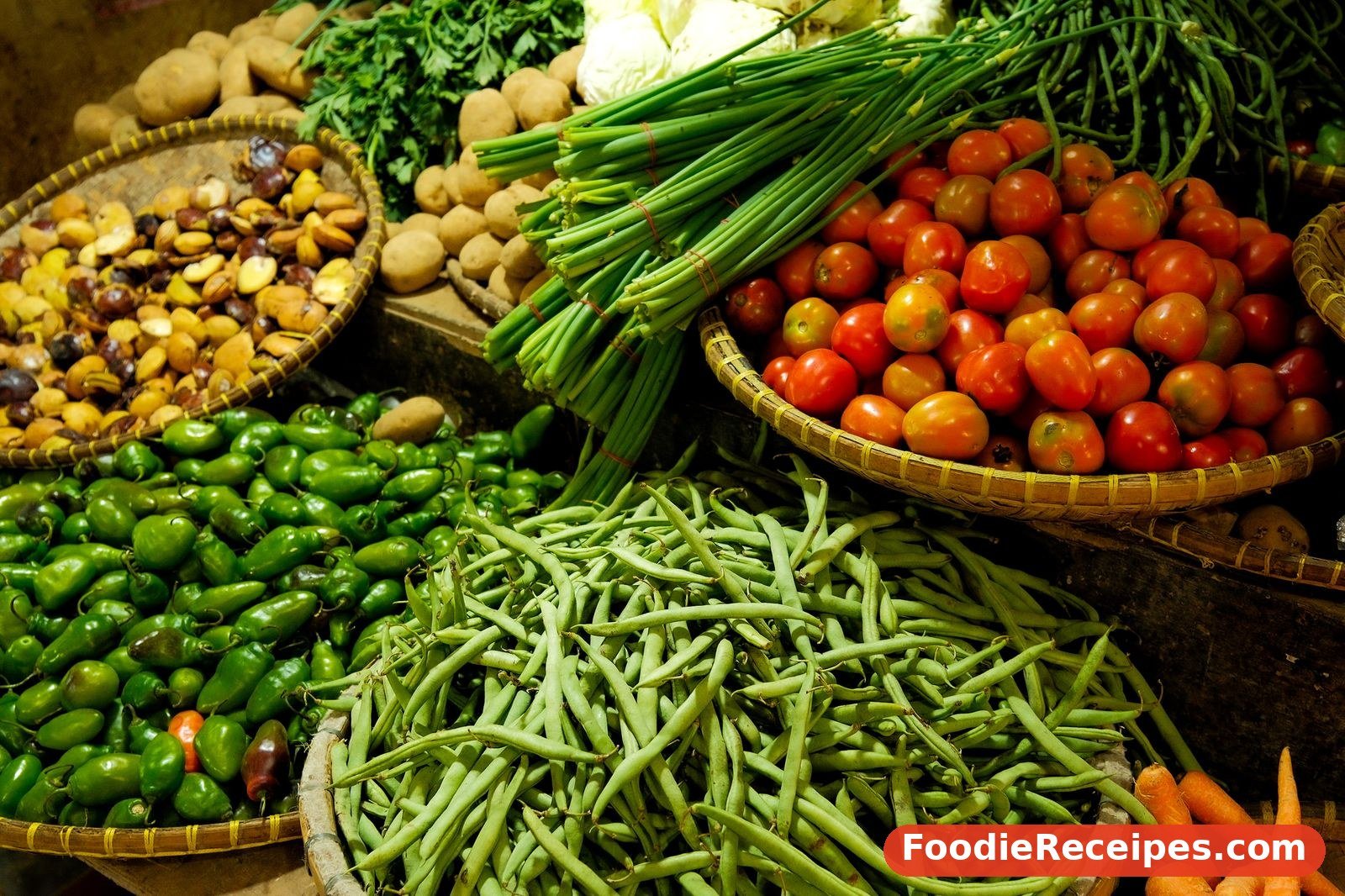
Buy beans that are firm, bright, and snap crisply when bent — limp, rubbery beans will never turn silky, only sad. Regular green beans are the classic; flat Italian-style pole beans are the old-fashioned garden favourite for this dish because they go especially tender and silky, and they are worth grabbing at a farmers’ market when you see them. “Snapping” beans is the traditional prep: trim the stem end (the blossom end can stay) and snap or cut the beans into short lengths. It is slow, pleasant, porch-sitting work, and a fine job to hand to anyone who wanders into the kitchen asking to help.
About the Potatoes
Waxy potatoes — new potatoes, reds, or baby golds — are the right choice because they hold their shape through the long simmer and their skins add to the dish. Cut them to a consistent size (halves or quarters about 1½ inches / 4 cm) so they finish with the beans. Starchy russets tend to dissolve into the broth, which thickens it pleasantly but costs you the potato chunks; if russets are all you have, add them halfway through the simmer instead of at the start.
Step-by-Step Method
- Render the bacon (7–9 minutes). Put the bacon pieces in a large Dutch oven or heavy pot over medium heat and cook, stirring occasionally, until the bacon is crisp and browned and its fat has rendered, 7–9 minutes. Lift the bacon out with a slotted spoon onto a paper towel–lined plate and set it aside for finishing the dish. Leave all the drippings in the pot — about 3 tablespoons (45 ml). (If using a ham hock instead, skip this step: brown the hock in 1 tablespoon of oil for a few minutes per side and proceed.)
- Soften the onion (4–5 minutes). Add the diced onion to the bacon drippings with a pinch of salt and cook over medium heat, stirring now and then, until soft and translucent, 4–5 minutes. Stir in the garlic and cook 30–60 seconds, until fragrant.
- Add the beans and the broth (3 minutes). Add the snapped beans to the pot and toss them in the drippings and onion for a minute — this brief fry in the fat coats them and starts their transformation. Pour in the chicken stock, then add the salt (start with the 1 teaspoon), black pepper, garlic powder and red pepper flakes (if using), and the sugar (if using). The beans will not be fully submerged; that is fine — they collapse as they cook. (With a ham hock, nestle it in among the beans now.)
- Bring to a simmer (5 minutes). Raise the heat and bring the pot to a boil, then immediately reduce to a low, steady simmer. Cover with the lid slightly ajar.
- Add the potatoes (at the 15-minute mark). Simmer the beans for 15 minutes, then stir in the potatoes, nestling them down into the broth. Adding the potatoes partway through keeps them from overcooking while the beans get their long simmer. Recover the pot.
- Simmer low and slow (30–40 minutes more). Continue simmering gently, stirring once or twice, for 30–40 minutes, until the beans are completely tender and silky — they should offer no squeak and no resistance — and the potatoes are tender all the way through when pierced with a knife. Total bean cooking time will be 45–55 minutes. The broth will have reduced and concentrated into a flavourful potlikker. If the pot ever looks dry (it should not, but stoves vary), add a splash of stock or water.
- Finish the dish (3 minutes). If you used a ham hock, lift it out, pull the meat from the bone, shred it, and stir it back in. Taste the broth and adjust the salt and pepper honestly — beans need confident seasoning. Stir in the vinegar and butter, if using, and scatter most of the crisp bacon over the top, saving a little for the table.
- Rest and serve (5 minutes). Let the pot rest off the heat for 5 minutes so the flavours settle and the broth coats the beans. Serve hot, in bowls or on plates with plenty of the potlikker spooned over, with hot sauce on the table and the reserved bacon on top.
Tips for Perfect Results
- Tender means tender. The whole point of Southern-style beans is their silkiness, which only arrives after 45 minutes or more of simmering. Beans pulled at 20 minutes are a different (also fine, but different) dish. Taste one: it should be soft all the way through with no raw snap left.
- Do not drown them. The beans should simmer in a modest amount of broth, not swim in a soup pot. Too much liquid dilutes the potlikker and slows the concentration of flavour. Start with the 3 cups (720 ml) and let the beans collapse into it.
- Season late, then season bravely. Bacon, ham, and stock all vary in saltiness, and the broth reduces as it cooks, concentrating whatever salt is there. Season fully only at the end, then be generous — properly seasoned potlikker is what makes people ask for the recipe.
- A little sugar is a secret, not a sweetness. Many Southern grandmothers added a teaspoon of sugar to a pot of beans, and it does not make them sweet — it smooths the edges and deepens the savoury flavour. Try it once before you decide against it.
- The vinegar goes in last. Acid added at the start can toughen beans’ skins and dull their colour. Stirred in at the end, a tablespoon of vinegar wakes the whole pot up without making it taste pickled.
- Low and slow beats fast and furious. A rolling boil batters the beans and potatoes apart and boils the broth away. Keep the surface at a lazy simmer and the dish minds itself.
Variations and Substitutions
- Ham hock or smoked turkey version. Replace the bacon with a smoked ham hock (about 300 g) or a smoked turkey wing or leg — the deep, long-simmered Southern choice for church suppers and holidays. The meat is shredded back into the pot at the end, making the dish heartier.
- Vegetarian Southern-style beans. Skip the meat and stock: use vegetable stock or water, 2 tablespoons (30 ml) of olive oil or butter for the onion, and 1 teaspoon (3 g) of smoked paprika to suggest the smokiness. It will not be identical, but it will be genuinely good.
- Green beans without potatoes. Leave the potatoes out for a simpler side that focuses purely on the beans — increase the beans to 2½ lb (1.1 kg) and simmer as directed. A classic next to fried chicken.
- Spicy Creole-leaning beans. Add a diced green bell pepper (about 150 g) with the onion, a pinch of cayenne, and a sliced smoked sausage (about 200 g) browned with the bacon, for a Louisiana-leaning pot.
- Canned or frozen beans, honestly assessed. Fresh beans are best, but frozen green beans (about 900 g) work well — reduce the simmer to about 35–40 minutes total. Canned beans are already fully cooked and soft; with canned, simmer only 20–25 minutes to marry the flavours, and add the potatoes first so they can cook in the broth. Drain and rinse canned beans to control the salt.
- A tomato in the pot. A diced ripe tomato (about 180 g) or a small can of diced tomatoes added with the broth gives the potlikker a gentle tang and colour — a variation common in parts of the Carolinas.
What to Serve With
This is the side dish that completes the classic Southern plate. Serve it with meatloaf, fried or baked chicken, pork chops, pot roast, baked ham, or country-fried steak — anywhere a savoury, brothy vegetable is welcome, which is nearly everywhere. It is a fixture of the holiday table next to turkey and dressing, and of Sunday dinner next to fried chicken and mashed potatoes (yes, two potatoes — the potatoes in the beans are part of the vegetable, and no Southerner will accept arguments on this point). Cornbread is not optional: you need it for the potlikker. A bowl of these beans and potatoes with a wedge of cornbread and a glass of sweet tea is also, on its own, a perfectly respectable supper.
Serving and Storage
Serve the beans hot, straight from the pot, with a slotted spoon for the beans and potatoes and a ladle for the potlikker — spoon broth over each serving; it is too good to leave behind. The dish sits happily on the stove, covered, over the lowest heat for up to an hour, which makes it ideal for holidays and company.
In the fridge: Leftovers keep beautifully for up to 4–5 days in an airtight container, stored in their broth. Like most slow-simmered dishes, the flavours deepen overnight and day-two beans are a small treasure.
In the freezer: The beans freeze well for up to 3 months; the potatoes soften somewhat on thawing but remain pleasant. Freeze in the broth, in portion-sized containers. Thaw overnight in the fridge.
To reheat: Return beans, potatoes, and broth to a pot and warm over medium-low heat until simmering and heated through, about 10 minutes. Microwaving a bowl works fine too. Add a splash of stock or water if the broth has been absorbed, and refresh the seasoning — a pinch of salt, a grind of pepper, and a tiny splash of vinegar bring reheated beans back to life.
Leftover ideas: Chop leftover beans and potatoes into a skillet hash with a fried egg on top, stir them into vegetable soup, mash the potatoes from the pot into the broth for a thicker second-day stew, or serve the whole thing over rice as an easy supper.
Frequently Asked Questions
Why do Southern green beans cook so long? Won’t they be mushy?
They will be soft — deliberately so. The Southern style prizes silky, broth-soaked tenderness over crispness, and the long simmer is what lets the beans absorb the smoky, savoury flavour all the way through. They should be tender and yielding, not disintegrating; if they are falling apart entirely, the pot boiled too hard or cooked too long.
Can I make this in a slow cooker?
Yes, it is an ideal slow-cooker dish. Render the bacon and soften the onion on the stove first for the best flavour, then combine everything in the slow cooker (potatoes included from the start here, since the heat is gentler) and cook on LOW for 6–7 hours or HIGH for 3–4 hours, until the beans are silky and the potatoes tender.
Can I use frozen or canned green beans?
Frozen beans work well with a slightly shorter simmer (35–40 minutes). Canned beans work in a pinch but need only 20–25 minutes since they are already cooked — and add the potatoes first so they get a head start in the broth. Fresh beans give the best texture and flavour by a clear margin.
What is potlikker, and why does everyone want it?
Potlikker (or pot liquor) is the flavourful broth left from simmering greens or beans with seasoning meat. It concentrates everything — the smoke, the onion, the beans themselves — into a savoury liquid that Southerners treat as a delicacy in its own right, traditionally sopped up with cornbread. Serving the beans dry and discarding the broth would be considered a small tragedy.
My beans turned out bland. What happened?
Almost always under-seasoning or too much liquid. Beans in broth need more salt than you expect, and the seasoning only concentrates if the broth stays modest and reduces a little. Fix a bland pot at the end with salt, plenty of black pepper, a splash of vinegar, and — if it still falls flat — a crumbled extra slice of crisp bacon or a pinch of garlic powder stirred in while hot.
Can I make this without pork?
Yes. Smoked turkey wings or legs give a very similar deep smokiness and are a traditional alternative. For a fully vegetarian pot, use the variation above with smoked paprika — you lose the pork, but the long simmer and good seasoning still deliver a satisfying dish.
When do the potatoes go in — beginning or middle?
In the middle, after the beans have had about 15 minutes. Beans need 45–55 minutes to turn silky; potatoes need only 30–40. Adding them partway means both finish perfectly at the same moment. In a slow cooker, everything can go in together because the heat is gentler.
How do I keep the beans a nice green colour?
Honestly, you do not — and that is fine. Long-simmered Southern beans turn a deep olive green, and that colour is the sign the dish is right. Bright green is the colour of a quick-cooked bean, which is a fine dish but a different one. If colour matters to you, the brief fry in drippings at the start and avoiding early acid (vinegar goes in last) keep them as green as this style allows.
Final Thoughts
Southern green beans with potatoes and bacon is slow food in the truest sense — not fussy, not expensive, just given the time it needs to become itself. A pot simmering on the back of the stove, smoky broth, silky beans, and potatoes that taste of everything around them: this is the side dish that has anchored Southern dinners for generations, and one bite of beans with a crumble of bacon and a sop of cornbread in the potlikker will tell you exactly why.