

If there is one dinner that deserves a permanent spot in your weeknight rotation, it is this one: juicy baked chicken thighs with crispy, golden skin, roasted alongside tender potatoes and sweet carrots on a single pan. It is the kind of honest, satisfying meal that American families have made forever — meat and vegetables, seasoned simply, cooked together until everything is delicious. No fancy techniques, no hard-to-find ingredients, and almost no washing up.
Bone-in, skin-on chicken thighs are the unsung heroes of home cooking. They are inexpensive, incredibly forgiving, and full of flavor. Unlike chicken breasts, which can dry out if you look at them wrong, thighs stay moist and tender even if dinner gets delayed by ten minutes. As they roast, the skin renders its fat down over the potatoes and carrots below, seasoning the vegetables from above while their edges caramelize in the heat. Everything comes out of the oven tasting like it took far more effort than it did.
The seasoning here is a classic American pantry blend — paprika, garlic powder, onion powder, thyme, salt, and pepper — with a little olive oil to help it cling and crisp. It is savory and familiar, the kind of flavor kids and grandparents both happily eat. But the real secret of this recipe is not the spice list. It is the arrangement: vegetables cut to the right size, everything in a single uncrowded layer, and a hot oven. Get those details right and you will get crispy skin, creamy-centered potatoes, and carrots with sweet, browned edges every single time.
This is also a wonderfully practical recipe. It scales up for a crowd on two pans, it welcomes whatever root vegetables you have in the crisper, and the leftovers reheat like a dream for lunches. It is real food, simply cooked — the heart of American home cooking.
Why Chicken Thighs Are the Weeknight Winner
Chicken breasts get all the attention, but thighs win on almost every measure that matters on a Tuesday night:
- Flavor. Dark meat simply tastes richer and more “chicken-y” than white meat.
- Forgiveness. Thighs stay juicy across a wide window of doneness. A few extra minutes will not ruin dinner.
- Price. Bone-in, skin-on thighs are usually the most affordable chicken in the store.
- Built-in sauce. The skin bastes the meat and the vegetables as it renders — no extra steps.
- Crispy skin. Properly roasted thigh skin turns shatteringly crisp, the part everyone wants.
The potatoes and carrots are not just filler, either. Potatoes roast up fluffy inside with crisp, golden edges, and carrots become sweet and tender as their natural sugars caramelize. Together with the chicken, they make a complete meal on one pan — no separate side dishes required unless you want them.
Serves: 4–6 | Prep time: 15 minutes | Cook time: 45–50 minutes | Total time: about 1 hour 5 minutes
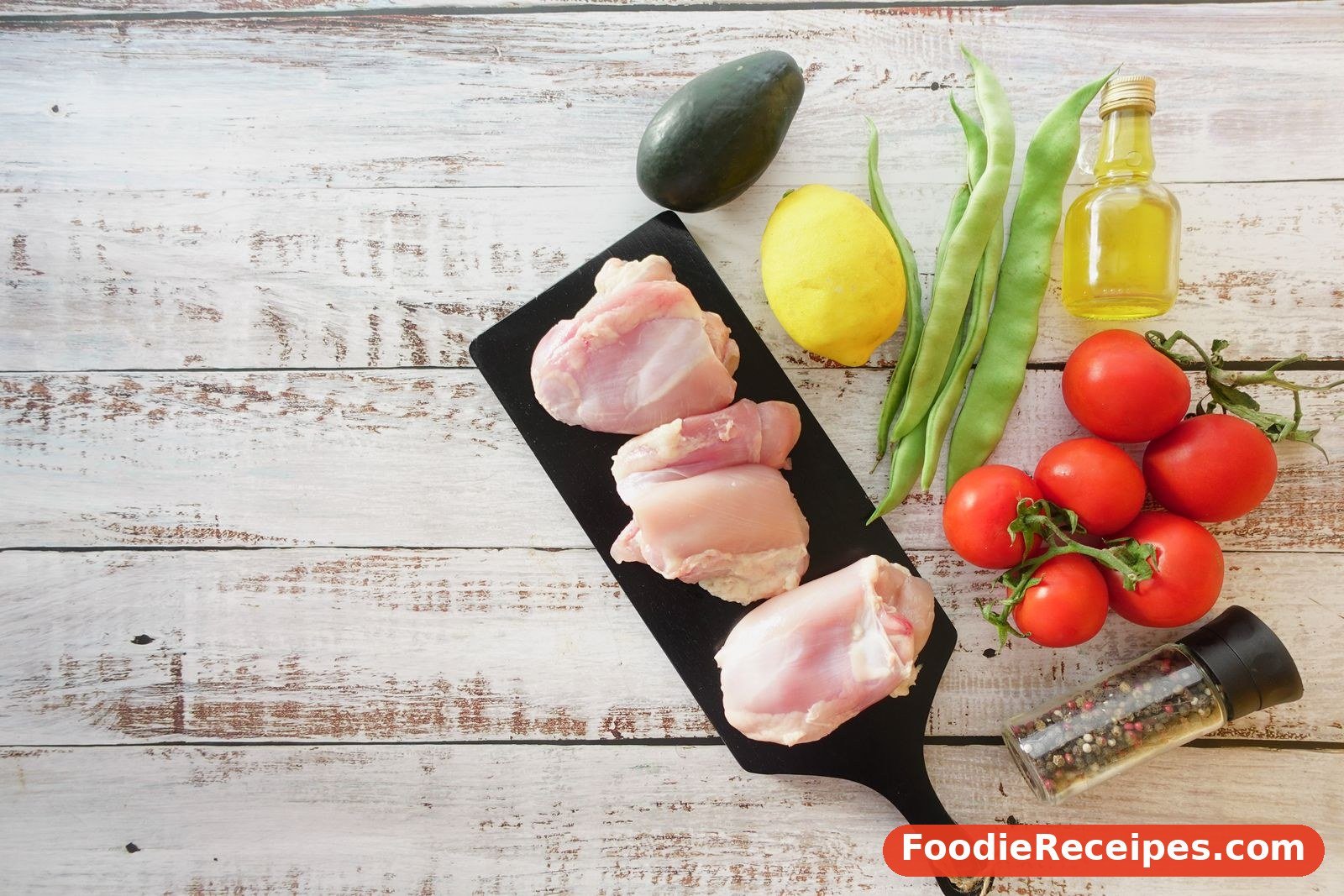
Ingredients
For the chicken and vegetables
- 6 bone-in, skin-on chicken thighs (about 2½ lb / 1.1 kg total)
- 1½ lb (680 g) Yukon Gold or red potatoes, cut into 1-inch (2.5 cm) chunks
- 1 lb (450 g) carrots (about 5 medium), peeled and cut into 1-inch (2.5 cm) pieces on the diagonal
- 1 medium yellow onion (150 g), cut into wedges (optional but delicious)
- 3 tablespoons (45 ml) olive oil, divided
- 3 cloves garlic (9 g), minced, or 1 teaspoon garlic powder
For the seasoning blend
- 2 teaspoons (12 g) fine sea salt
- 1 teaspoon (2 g) black pepper
- 2 teaspoons (5 g) paprika (sweet or smoked)
- 1 teaspoon (3 g) garlic powder
- 1 teaspoon (3 g) onion powder
- 1 teaspoon (1 g) dried thyme, or Italian seasoning
- ½ teaspoon (1 g) dried rosemary, crushed (optional)
- ¼ teaspoon red pepper flakes (optional, for gentle heat)
To finish
- 1 tablespoon (4 g) chopped fresh parsley
- Lemon wedges, for serving (optional)
- Flaky salt, for the crispy skin
A note on potatoes: Yukon Golds are the sweet spot — thin-skinned, creamy, and they roast beautifully without peeling. Russets work too; peel them and cut the chunks a little bigger, since they soften faster. Baby potatoes can be halved and need no other prep. Whatever you choose, keep the pieces close to 1 inch (2.5 cm) so they finish at the same time as the chicken.
Step-by-Step Method
- Heat the oven and prepare the pan. Preheat the oven to 425°F (220°C) with a rack in the center. Line a large rimmed baking sheet (half-sheet size, about 18 × 13 inches / 46 × 33 cm) with parchment paper or foil for easy cleanup, or leave it bare for maximum browning. Set the chicken on the counter while you prep the vegetables so it loses its fridge chill — 20 minutes at room temperature helps it cook evenly.
- Season the vegetables (5 minutes). Put the potato chunks, carrot pieces, and onion wedges in a large bowl. Drizzle with 2 tablespoons (30 ml) of the olive oil and sprinkle with about half of the seasoning blend. Toss until every piece is coated and glossy.
- Arrange the vegetables. Spread the vegetables on the baking sheet in a single layer with a little space between pieces. Crowding is the enemy of roasting — pieces that touch will steam each other instead of browning. If everything does not fit comfortably, use two pans; it is worth it.
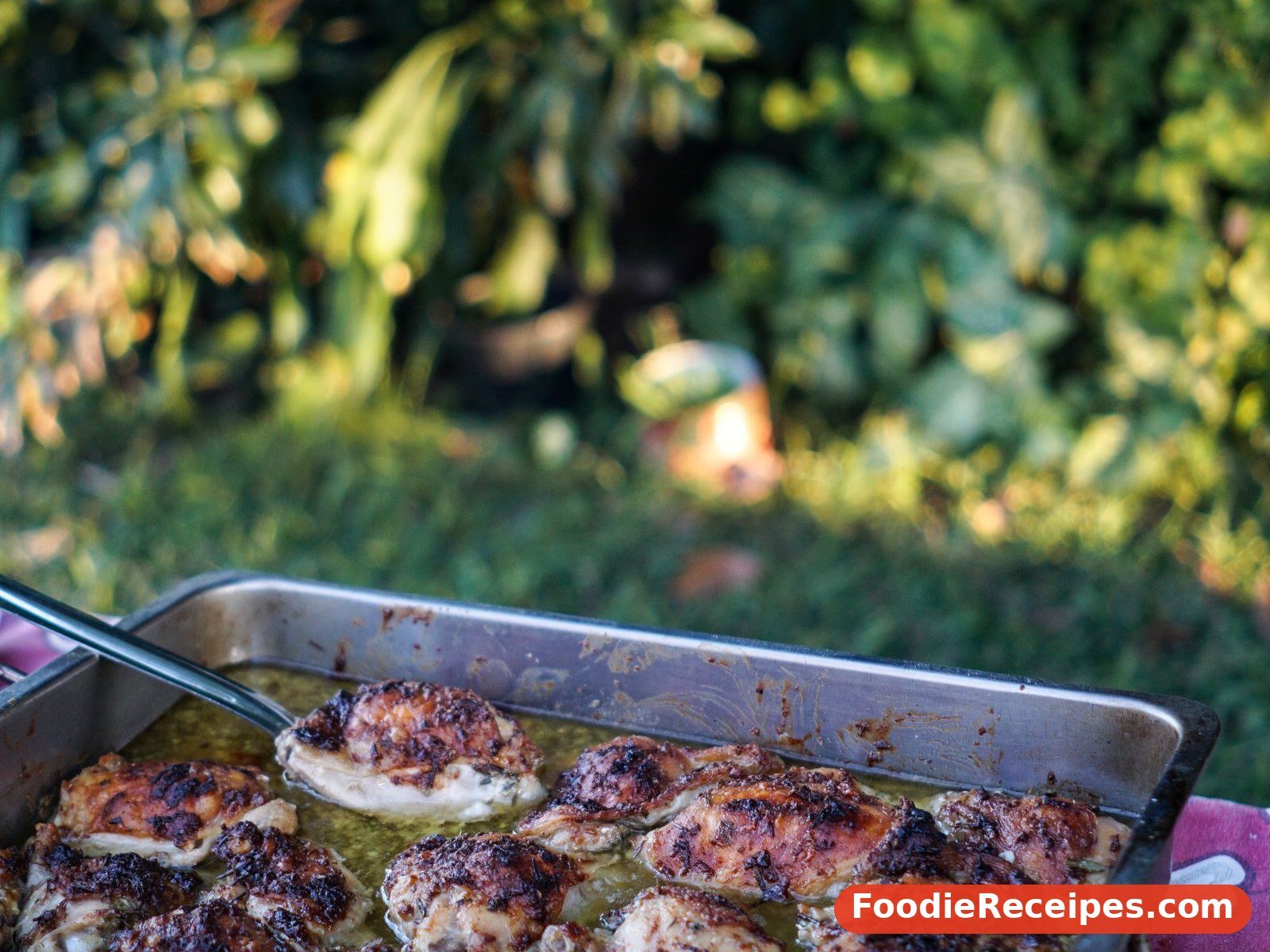
- Season the chicken (3 minutes). Pat the chicken thighs completely dry with paper towels — this is the most important step for crispy skin. In a small bowl, mix the remaining seasoning blend with the remaining 1 tablespoon (15 ml) olive oil and the minced garlic to form a loose paste. Rub the paste all over the chicken, including under the skin where you can gently loosen it with your fingers.
- Arrange the chicken. Nestle the chicken thighs, skin side up, among the vegetables, making sure each thigh sits mostly on the pan rather than on top of vegetables, so the skin can crisp. Tuck any loose vegetables around, not under, the chicken.
- Roast (35 minutes, undisturbed). Slide the pan into the oven and roast for 35 minutes without opening the door. The skin will render, the vegetables will begin to caramelize, and the pan juices will bubble.
- Check and finish (10–15 minutes more). At 35 minutes, check the chicken: the skin should be deep golden and crisp. Continue roasting for 10 to 15 minutes more, until the chicken reaches an internal temperature of 175°F (79°C) in the thickest part (thighs are at their juicy best a bit beyond the 165°F minimum), the potatoes are tender when pierced with a fork, and the carrots have browned edges. If the skin needs more color, broil for 1 to 2 minutes, watching constantly.
- Rest (5–10 minutes). Remove the pan from the oven and let everything rest for at least 5 minutes. The chicken juices will settle back into the meat, and the vegetables will finish absorbing the pan drippings.
- Serve. Scatter fresh parsley over the pan, sprinkle the chicken skin with a pinch of flaky salt, and serve straight from the pan with lemon wedges on the side for anyone who wants brightness.
Tips for Perfect Results
- Dry skin = crisp skin. Moisture is the enemy of crisping. Pat the thighs dry, and if you have time, season them and leave them uncovered in the fridge for a few hours or overnight — the dry fridge air works wonders.
- Hot oven, always. 425°F (220°C) is the sweet spot: hot enough to crisp skin and caramelize vegetables, gentle enough to cook the chicken through without burning the spices.
- Cut vegetables to match the cooking time. Potatoes and carrots are dense. One-inch pieces finish with the chicken; much bigger and they will still be hard in the middle, much smaller and they will scorch.
- Do not crowd the pan. This is the most common sheet pan mistake. Vegetables need space for moisture to escape. Two pans with room beat one stuffed pan every time.
- Skin side up the whole time. Never flip the chicken. The skin needs uninterrupted contact with the hot oven air to render and crisp.
- Use a thermometer. Thighs are forgiving, but a thermometer removes all doubt. Aim for 175°F (79°C) for the best texture; the meat will still be very juicy.
- Spoon the pan juices over the vegetables at serving. The drippings at the bottom of the pan are liquid gold — garlicky, salty, and full of chicken flavor.
- Rest the chicken. Five minutes of resting keeps the juices in the meat instead of all over the cutting board.
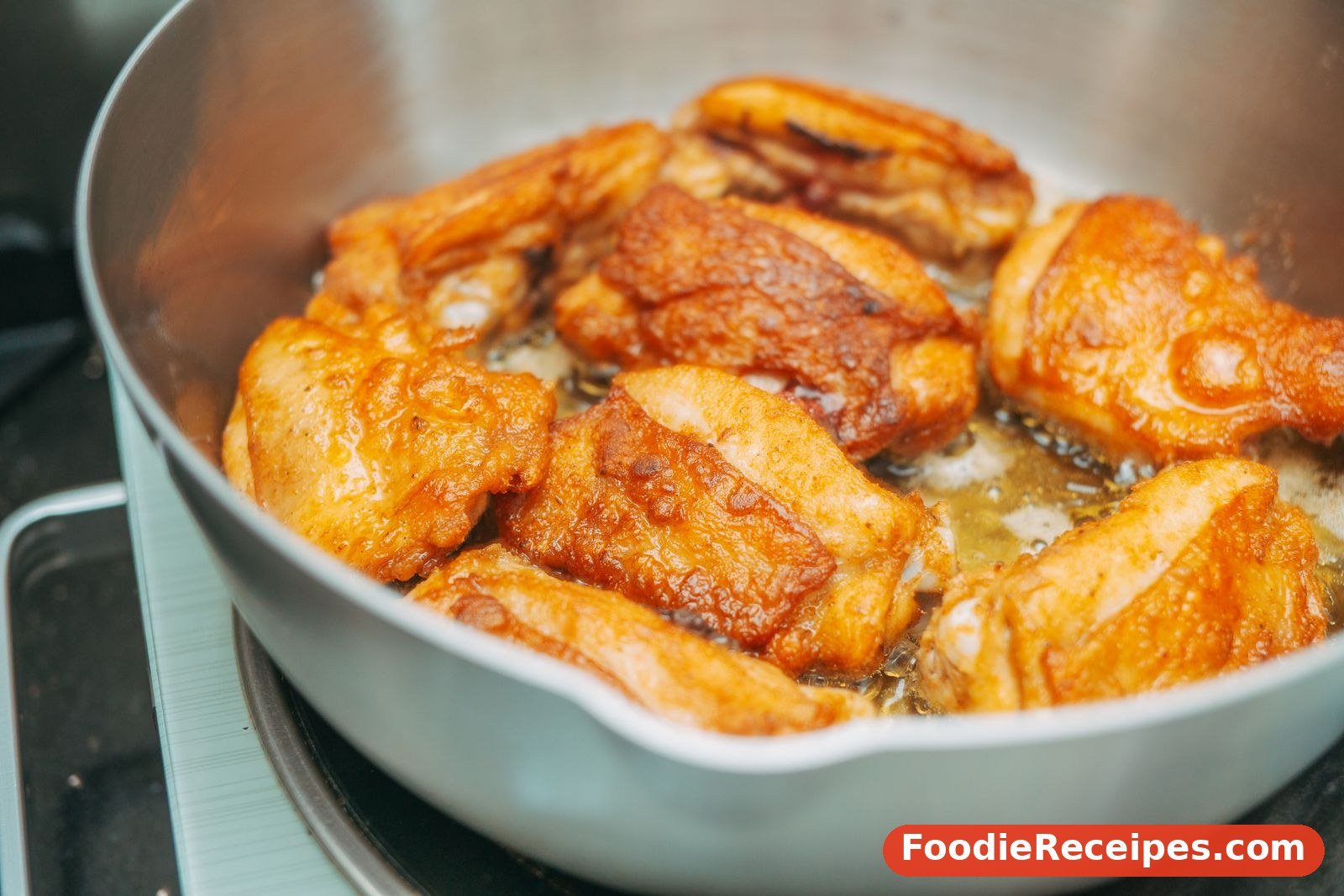
Common mistakes: roasting at too low a temperature (pale, rubbery skin), cutting the potatoes too large (raw centers), and piling the vegetables under the chicken (they steam in the juices and never brown). Keep everything in one layer and the recipe takes care of itself.
Variations and Substitutions
- Boneless thighs: Use boneless, skinless thighs and reduce the total roast to about 30–35 minutes. You will lose the crispy skin, but the meat stays juicy. Check for 165°F (74°C).
- Chicken drumsticks or leg quarters: Both work beautifully with the same seasoning and timing; leg quarters may need 5 extra minutes.
- Different vegetables: Sweet potatoes, parsnips, Brussels sprouts (halved), green beans (add for the last 15 minutes), and chunks of zucchini (also add late) all roast well here. Match the vegetable to the timing — hard roots go in at the start, tender vegetables near the end.
- Honey garlic version: Whisk 2 tablespoons (30 ml) honey with the oil and brush it over the chicken for the last 10 minutes of roasting. Watch closely so the honey does not burn.
- Cajun style: Swap the seasoning blend for 1 tablespoon Cajun seasoning and a squeeze of lemon at the end.
- Mustard herb version: Add 1 tablespoon Dijon mustard to the oil paste and double the thyme and rosemary for a French-country feel.
- Lemon pepper version: Use lemon pepper seasoning in place of the blend and roast lemon halves, cut side down, right on the pan.
- Add a pan sauce: Pour the drippings into a small pan, whisk in ½ cup (120 ml) chicken broth and a knob of butter, simmer 2 minutes, and spoon over everything.
What to Serve With
The pan already holds meat, potatoes, and vegetables, so sides can be light and simple:
- A simple green salad with a sharp vinaigrette to balance the richness
- Buttered dinner rolls or crusty bread for the pan juices
- Steamed green beans or peas for a fresh, sweet contrast
- Coleslaw for crunch
- Applesauce — a classic American partner for roast chicken
- A scoop of cranberry sauce in the fall and winter months
Serving and Storage
Serve the chicken and vegetables hot, straight from the pan, letting everyone take a thigh plus a generous scoop of potatoes and carrots. Spoon the pan juices over the top of each plate.
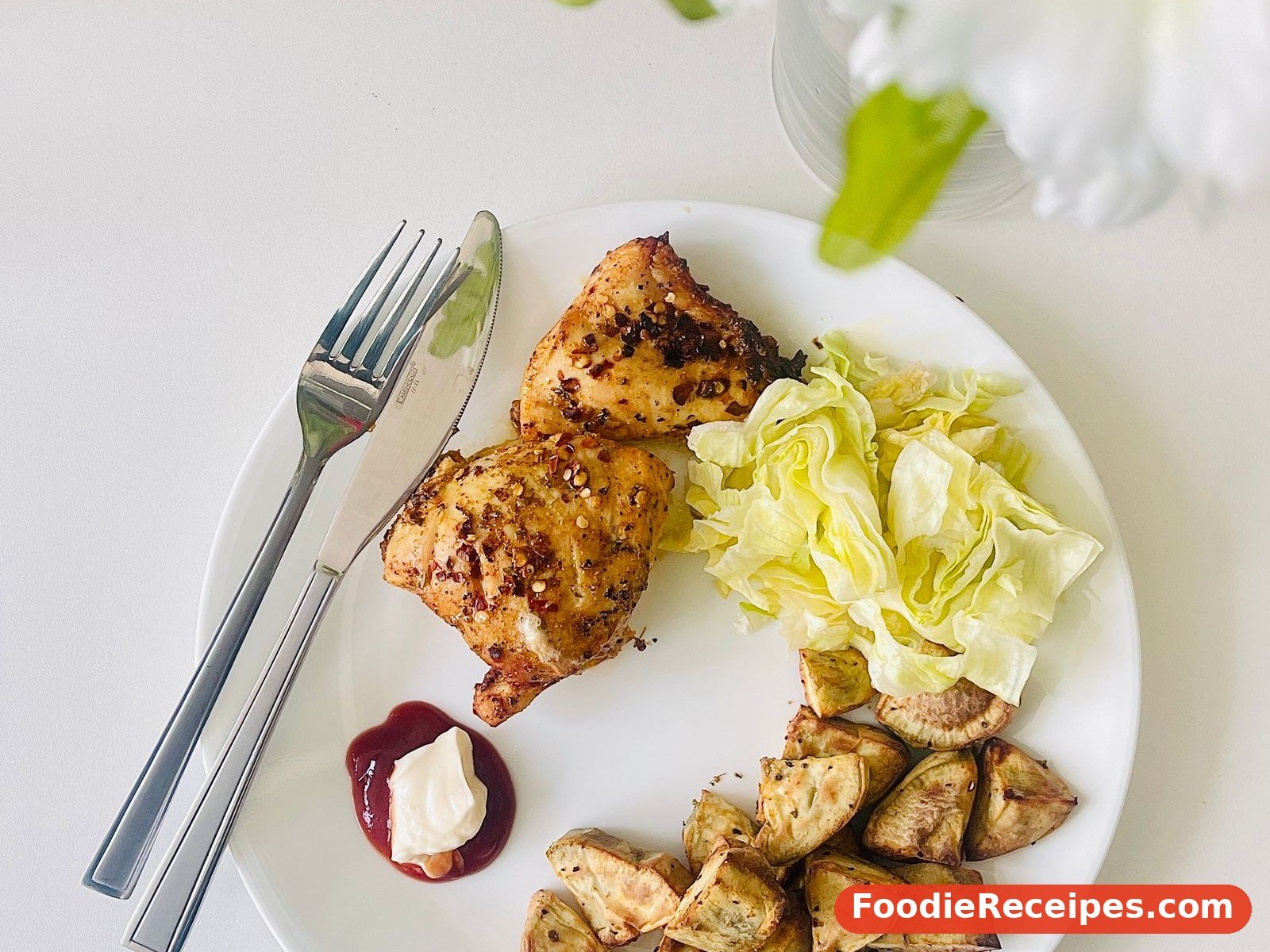
Refrigerator: Store the chicken and vegetables together in an airtight container for up to 4 days.
Freezer: Cooked chicken thighs freeze well for up to 3 months. The potatoes and carrots will soften somewhat after freezing, so many cooks freeze the chicken alone and make fresh vegetables when serving. Thaw overnight in the fridge.
Reheating: For the best skin, reheat on a baking sheet in a 400°F (200°C) oven for 12 to 15 minutes, until hot and the skin re-crisps. An air fryer at 375°F (190°C) for 5 to 6 minutes is even better. The microwave works for speed but the skin will be soft. Reheat to 165°F (74°C).
Leftover ideas: Shred leftover chicken for chicken salad, tacos, quesadillas, or a quick soup. The roasted vegetables are excellent chopped into a breakfast hash with a fried egg on top.
Frequently Asked Questions
Why is my chicken skin not crispy?
The three usual culprits are moisture, crowding, and a cool oven. Pat the skin very dry, give the thighs space on the pan, and make sure the oven is fully preheated to 425°F (220°C). A final minute or two under the broiler fixes almost any pale skin — just watch it closely.
Can I use chicken breasts instead?
You can, but the timing changes. Bone-in breasts are larger and leaner; roast at 400°F (200°C) and check early, pulling them at 165°F (74°C). Boneless breasts cook in about 25 minutes, so start the vegetables 20 minutes before adding the chicken to the pan.
Do I need to peel the potatoes and carrots?
Carrots are better peeled, since their skin can taste bitter after roasting. Thin-skinned potatoes like Yukon Gold or red potatoes just need a good scrub. Russets roast best peeled.
Can I prep this ahead of time?
Yes. Season the chicken and cut the vegetables up to a day ahead; store them separately in the fridge (keep cut potatoes in cold water so they do not brown, then dry them well before roasting). Assemble the pan and roast when you are ready. Dinner, handled.
How do I know the vegetables are done?
Pierce the largest potato chunk with a fork or the tip of a knife — it should slide in with no resistance, and the edges should be golden. Carrots should be tender with some caramelized spots.
Can I make this with frozen chicken thighs?
Thaw them first. Frozen thighs release a flood of water as they cook, which steams the vegetables and prevents browning, and the skin will never crisp. Thaw overnight in the refrigerator or in a bowl of cold water for a couple of hours.
What temperature should chicken thighs be cooked to?
They are safe at 165°F (74°C), but dark meat tastes best at 175–185°F (79–85°C), where the connective tissue melts and the meat turns silky. Unlike breast meat, thighs do not dry out at these temperatures.
Can I use sweet potatoes instead of regular potatoes?
Happily. Sweet potatoes roast a little faster and turn very soft and sweet, so cut them into slightly larger chunks — about 1½ inches (4 cm) — and expect them to caramelize more deeply. The combination of sweet potato, carrot, and the savory spice blend is especially good in the fall.
Can I cook this in the air fryer?
Yes, in batches. Air fry at 400°F (200°C) for about 22 to 26 minutes, with the vegetables in a single layer around the chicken, turning the vegetables once. Work in two batches rather than crowding — air fryers need airflow just like ovens do.
Final Thoughts
Easy baked chicken thighs with potatoes and carrots is not a flashy dinner, and that is exactly its charm. It is affordable, dependable, and deeply satisfying — the kind of meal that makes a house smell like home and gets everyone to the table without complaint. Master the simple rules — dry skin, hot oven, single layer — and this recipe will serve you faithfully for years.