

Few smells can compete with cinnamon rolls in the oven — warm cinnamon, baking dough, butter, and brown sugar, all drifting through the house and pulling people out of bed better than any alarm clock. And few breakfasts could be easier than this casserole, which takes two humble cans of refrigerated cinnamon rolls and turns them into a golden, gooey, crowd-pleasing bake that tastes like you spent the morning rolling dough from scratch.
The idea is beautifully simple. The canned rolls are cut into bite-sized pieces and nestled into a baking dish, then soaked with a sweet vanilla custard — eggs, cream, maple syrup, cinnamon — that bakes up around them into something between a bread pudding and the soft center of the world’s best cinnamon roll. The icing packets that come in the cans are warmed and drizzled over the top at the end, so every serving gets that classic sweet finish. Ten minutes of prep, one dish, and a breakfast that disappears faster than any other on the table.
This is the recipe for Christmas morning, sleepovers, office brunches, and any day that deserves to start with something warm and sweet. Let us show you the simple method, the small tricks that keep it from ever turning soggy or dry, and the variations — apple, pecan, pumpkin — that make it a year-round favorite.
Serves: 8 people | Prep time: 10 minutes | Cook time: 25–30 minutes | Resting time: 5 minutes | Total time: about 45 minutes
Why This Casserole Works So Well
Canned cinnamon rolls are a smart shortcut because the hardest work — the yeasted dough, the cinnamon-sugar filling, the perfect swirl — is already done well. What the casserole treatment adds is the one thing a plain pan of rolls can lack: moisture and richness all the way through. Baked alone, canned rolls can be a little dry at the edges by the time their centers are done. Bathed in custard, every piece bakes up soft and tender, with gooey cinnamon pockets and lightly crisp, golden tops.
The custard itself is doing quiet double duty. The eggs give the dish structure so it scoops into real servings instead of slumping, and the cream and maple syrup add a richness that makes the whole thing taste bakery-made. Because the pieces are cut small, every bite has the ideal ratio — some swirl, some custard, some caramelized edge — rather than the tough outer ring a whole roll can have.
And practically speaking: this recipe scales, travels, reheats, and can be assembled a few hours ahead or even the night before. It is special-occasion food with a weekday effort level, which is the best kind of recipe there is.

Ingredients
- 2 cans (12.4 oz / 351 g each) refrigerated cinnamon rolls with icing (8 rolls per can, 16 rolls total) — regular size, not the jumbo “Grands” style (see the note below)
- 4 large eggs (about 200 g without shells)
- ½ cup (120 ml) heavy cream (or half-and-half; whole milk works with a slightly lighter result)
- ¼ cup (60 ml) pure maple syrup, plus more for serving if you like
- 2 teaspoons (10 ml) pure vanilla extract
- 1 teaspoon (3 g) ground cinnamon
- ¼ teaspoon fine sea salt (balances the sweetness — do not skip it)
- 2 tablespoons (28 g) unsalted butter, melted, for the dish and drizzling
- Both icing packets from the cans, reserved for finishing
Optional mix-ins and toppings
- 1 medium apple (about 180 g), peeled and finely diced — about 1¼ cups
- ½ cup (60 g) chopped pecans or walnuts
- ¼ cup (55 g) packed brown sugar, for an extra caramel-like top
- ½ cup (85 g) raisins or dried cranberries
- A dusting of powdered sugar at the table
About the rolls: Standard 12.4 oz (351 g) cans of cinnamon rolls — the 8-count size — are what this recipe is calibrated for. If you use the larger 17.5 oz (496 g) “Grands” style rolls, cut each roll into 6 pieces instead of 4 and add about 5 minutes to the bake time, checking the center carefully. Store-brand rolls work exactly as well as name-brand here; the custard is the great equalizer.
Step-by-Step Method
- Preheat and prepare the dish. Preheat your oven to 375°F (190°C). Brush a 9×13-inch (23×33 cm) baking dish (or a deep 9×9-inch / 23×23 cm dish for a thicker casserole) generously with the melted butter — buttering the dish adds flavor and helps the edges caramelize instead of sticking.
- Cut and arrange the rolls (5 minutes). Open the cans and set the icing packets aside (they go on at the end — do not bake them). Using kitchen scissors or a sharp knife, cut each cinnamon roll into 4 pieces. Arrange the pieces in the prepared dish in a single, fairly even layer, swirl-side up where you can manage it. Scatter the apple, nuts, or raisins over and between the pieces if you are using them.
- Whisk and pour the custard (3 minutes). In a medium bowl, whisk the eggs, cream, maple syrup, vanilla, cinnamon, and salt until completely uniform. Pour the custard slowly and evenly over the roll pieces, trying to wet every piece. Drizzle the remaining melted butter over the top. If you are using the brown sugar, sprinkle it over now — it bakes into a light caramel crunch.

- Rest briefly (5–10 minutes, optional but helpful). Let the dish sit on the counter for 5 to 10 minutes so the custard begins soaking into the cut surfaces of the dough. (If assembling the night before, cover and refrigerate at this point instead — see Serving and Storage.)
- Bake (25–30 minutes). Bake until the casserole is puffed, deeply golden on top, and just set in the center — the custard should no longer look liquid, and a knife inserted in the middle should come out clean of raw custard (cinnamon smears are fine). Begin checking at 23 minutes; ovens vary, and an overbaked casserole dries out quickly. If the tops brown too fast, tent loosely with foil for the final minutes.
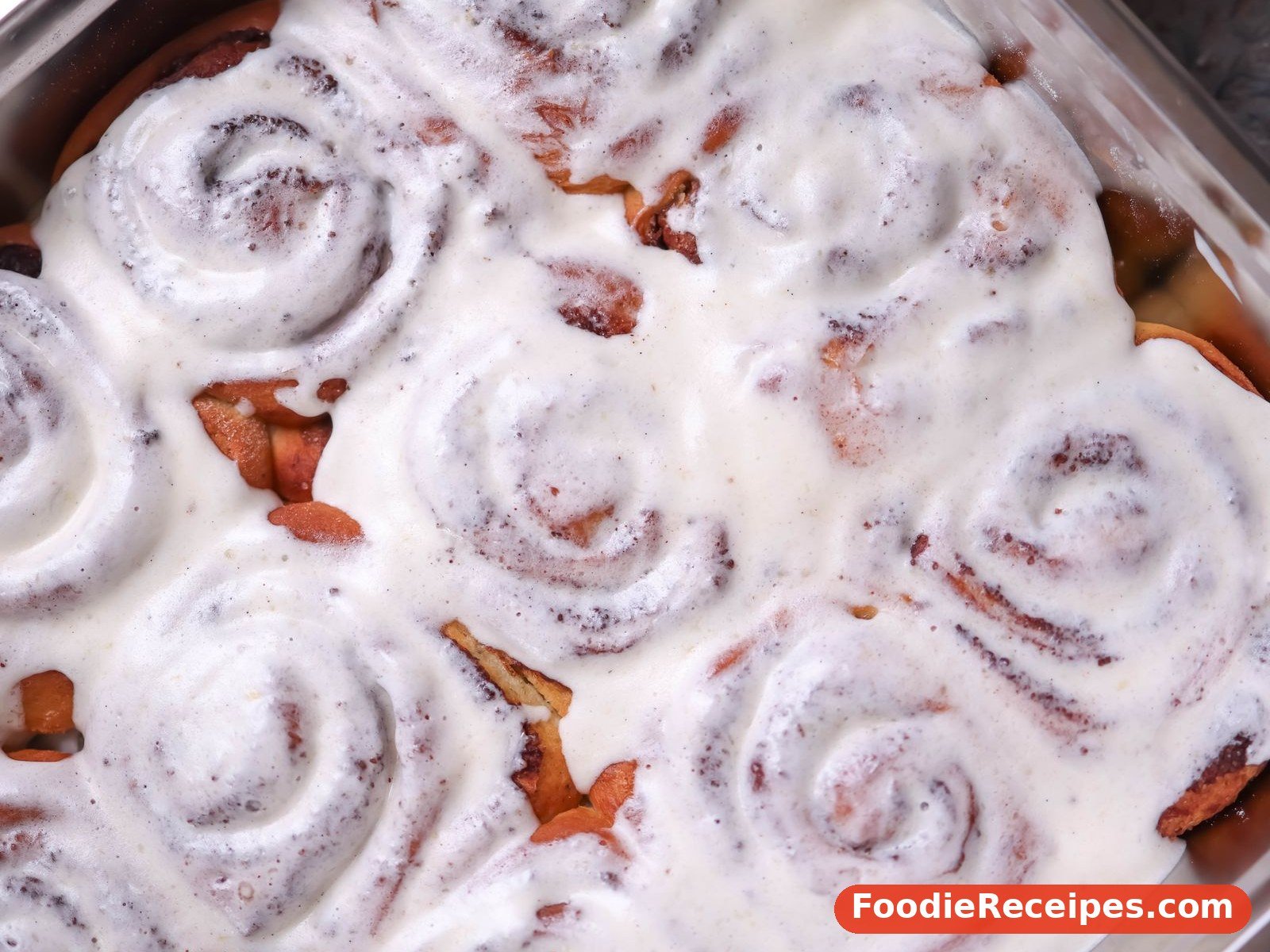
- Ice and serve (5 minutes). Let the casserole rest for 5 minutes. Meanwhile, warm the reserved icing: snip the packets and microwave the icing in a small bowl for 10–15 seconds, or place the sealed packets in a cup of warm water for a few minutes, until it pours in ribbons. Drizzle generously over the warm casserole. Scoop into bowls and serve immediately, with extra maple syrup at the table for anyone who wants it.
Tips for Perfect Results
- Cut pieces mean even baking. Whole rolls in a casserole bake unevenly — raw centers, dry edges. Quartered pieces expose lots of surface to the custard and cook through uniformly. Take the two minutes; it is the recipe’s core technique.
- Warm the icing. Cold icing plops; warm icing ribbons. Thirty seconds of warmth transforms the finish from lumpy to bakery-beautiful.
- Judge doneness by the center, not the edges. The edges always look done first. The center should look set and puffed with no liquid custard pooling. A tiny jiggle is fine; a slosh is not.
- The salt matters. A quarter teaspoon sounds minor, but it keeps a very sweet dish from tasting flat and one-note. You will not taste “salt” — you will taste more cinnamon, more vanilla, more everything.
- Do not drown it. This custard amount is calibrated. Doubling the liquid “for extra gooeyness” produces a soggy bottom that never sets. If you like it saucier, serve warm maple syrup or a little warm cream at the table instead.
- Serve it warm, not hot. Five minutes of resting lets the custard finish setting so servings scoop neatly instead of running — and nobody burns their tongue on molten cinnamon sugar.

Variations and Substitutions
Apple pie version: Use the diced apple, add ¼ teaspoon nutmeg to the custard, and top with the brown sugar. It tastes like the inside of an apple pie met a cinnamon roll, which is exactly as good as it sounds.
Pecan sticky style: Scatter the pecans over the top with the brown sugar and an extra tablespoon of melted butter before baking. The top bakes into a praline-like crunch over the soft casserole.
Pumpkin spice (autumn favorite): Whisk ½ cup (120 g) pumpkin purée and 1 teaspoon pumpkin pie spice into the custard, and reduce the cream to ⅓ cup (80 ml). Finish with the icing as usual.
Berry brunch: Scatter 1 cup (150 g) fresh blueberries or sliced strawberries between the pieces. The berries burst into jammy pockets — especially lovely for spring brunches.
Cream cheese icing upgrade: Beat one icing packet with 2 oz (57 g) softened cream cheese and 1 tablespoon of milk until smooth and pourable. (Yes, this casserole is delicious without it too — but for cream cheese icing devotees, this is the best of both worlds.)
Lighter version: Use half-and-half instead of cream, reduce the maple syrup to 3 tablespoons, and skip the butter drizzle on top. The casserole stays tender and sweet, just a little less rich.
Slow cooker method: Assemble in a greased slow cooker, cover, and cook on LOW for 2½ to 3 hours, until set in the center. The edges will be softer than the oven version — more pudding-like — and it is a fine way to keep brunch warm for a crowd that eats in shifts.
What to Serve With
Cinnamon roll casserole is sweet and rich, so the table around it should bring balance: something salty, something fresh, something with protein. Crispy bacon or sausage links are the classic partners. A simple egg dish — scrambled eggs or a frittata — turns the spread into a complete brunch. Fresh fruit, especially berries, melon, or grapefruit, cuts through the sweetness beautifully. Coffee is close to mandatory, and a pitcher of cold milk makes kids very happy. Set the casserole in the middle of the table, warm and glistening with icing, and let everyone serve themselves.
Serving and Storage
Serve warm, scooped into bowls or onto plates, within a few minutes of icing. If the casserole must wait, keep it loosely tented with foil in a warm (200°F / 95°C) oven for up to 20 minutes, and ice it just before serving.
Make ahead: Assemble the casserole completely (through the custard pour), cover tightly, and refrigerate for up to 12 hours. In the morning, let it stand at room temperature for 20 minutes while the oven preheats, then bake as directed, adding about 3–5 minutes. The overnight soak makes the pieces even more custardy — many cooks prefer it this way.
Refrigerator: Leftovers keep for up to 3 days, covered tightly or in an airtight container.
Freezer: Baked casserole freezes acceptably for up to 1 month, though the texture softens a bit. Cool completely, wrap well (ideally before icing; add fresh icing after reheating if you can), and thaw overnight in the fridge.
Reheating: Individual portions reheat beautifully in the microwave for 45–60 seconds. For a whole dish, cover with foil and warm at 325°F (165°C) for 12–15 minutes. A quick drizzle of fresh icing or maple syrup after reheating makes leftovers taste newly made.
Choosing Your Cinnamon Rolls
A quick word at the grocery store pays off here. Look for cans that are well within their date, and give the can a gentle press — it should feel firm, not puffy, which can signal the dough has begun to proof in the can. Regular (not low-fat) rolls give the richest result, and versions labeled with extra cinnamon or a cream cheese–style icing all work in this casserole without adjustment. If your store sells a store brand at half the price, buy it with confidence: once the rolls are cut, soaked in custard, and baked, even seasoned tasters cannot tell the brands apart. What matters far more than the brand is freshness — and the bake itself, which you control completely.
Frequently Asked Questions
Can I use the jumbo “Grands” cinnamon rolls instead?
Yes. Cut each large roll into 6 pieces, use a deep dish, and add about 5 minutes to the bake time. Check the center carefully — the larger pieces need the extra minutes for the custard to set and the dough to cook through.
Why did my casserole come out soggy in the middle?
Either too much liquid, too short a bake, or no resting time. Measure the custard as written, bake until the center is visibly set (not just the edges), and give it the full 5-minute rest before scooping. A glass dish also lets you peek at the bottom layer’s color for extra confidence.
Can I make this without eggs?
The eggs are the custard’s structure, so the result changes without them — but you can make a softer, pudding-style version by replacing the eggs and cream with 1¼ cups (300 ml) of half-and-half plus 2 tablespoons of cornstarch whisked in. Bake until just set; it will be spoonable rather than sliceable, and still very tasty.
Do I have to use the icing that comes in the can?
No — it is traditional and easy, but you can make a quick icing instead: whisk 1 cup (120 g) powdered sugar with 2 tablespoons of milk and ½ teaspoon of vanilla until pourable. Or skip icing entirely and dust with powdered sugar; the casserole is sweet enough to stand on its own.
Can I halve the recipe for a smaller household?
Yes. Use one can of rolls, halve everything else, and bake in an 8×8-inch (20×20 cm) dish for about 20–24 minutes. Watch the center closely — smaller casseroles go from set to overbaked quickly.
What if I only have cinnamon rolls without icing packets?
Some store brands sell rolls without icing. Use the homemade icing in the question above, or finish with maple syrup and a dusting of powdered sugar. No one will miss the packet.
Can I add the icing before baking?
We do not recommend it. Icing baked on top loses its creamy texture and can brown and toughen. Drizzled over the warm casserole, it melts into glossy ribbons that pool in the swirls — that is the finish you want.
How do I keep the top from getting too dark?
Tent loosely with foil once the top reaches a deep golden color, usually around the 20-minute mark, and finish baking covered. Also make sure your rack is in the center of the oven, not the top position.
A Final Word From Our Kitchen
Some recipes are impressive simply because they are complicated. This one is impressive because it is not. Two cans of cinnamon rolls, a bowl of custard, and half an hour stand between you and the kind of breakfast that makes people linger at the table, going back for “just one more scoop.” Keep the ingredients in the fridge and this recipe in your back pocket — you will reach for it every time a morning deserves to feel truly, warmly, memorably special.