
Scrambled eggs sound like the simplest food in the world — and in a way they are, with just a pan, a spatula, and a few minutes between you and breakfast. But anyone who has eaten truly great scrambled eggs knows there is a world of difference between the dry, rubbery eggs of a rushed weekday and the soft, creamy, cloud-like eggs of a good diner or a careful home cook. This recipe guarantees the second kind, and it does it with one humble secret ingredient: cottage cheese.
Stirring cottage cheese into scrambled eggs is an old-fashioned trick that deserves a big comeback. As the eggs cook low and slow, the little curds melt right into them, creating pockets of creaminess and a richness that tastes like you added cream and cheese — because, in a way, you did. The cottage cheese also adds a welcome boost of protein and keeps the eggs moist and tender instead of drying out on the plate. And here is the best part for skeptics: once cooked, you cannot really see the cottage cheese, and its flavor is mild and pleasant. Picky eaters, including plenty of kids, devour these eggs without ever guessing the secret.
This recipe gives you the full low-and-slow method, scaled for a family breakfast, along with every small technique that matters: how to whisk, when to salt, how to read the curds, and exactly when to pull the pan off the heat. Master this once and you will never make plain scrambled eggs the same way again.
Serves: 4 people | Prep time: 5 minutes | Cook time: 6–8 minutes | Total time: about 15 minutes
Why Cottage Cheese Makes Eggs Taste Like a Diner’s Best
Cottage cheese does three beautiful things in a pan of eggs.
First, moisture insurance. Eggs are mostly protein, and as they cook, those proteins tighten and squeeze out water — which is exactly how eggs become dry and weepy. The curds of cottage cheese hold moisture and release it gently as they melt, keeping every curd of egg plush and creamy even if you overshoot the cooking time by a few seconds. It is the most forgiving scrambled egg recipe we know.
Second, richness without heaviness. A spoonful of cottage cheese gives the eggs the luxurious texture people chase with heavy cream and butter, plus a gentle tang and a cheesy depth — but the eggs still taste like eggs, and the overall plate stays light. Small-curd cottage cheese melts most seamlessly; large-curd works too, leaving slightly more distinct creamy pockets.
Third, protein and staying power. Cottage cheese is famously protein-rich, so these eggs keep everyone full noticeably longer than plain eggs — a real advantage on busy mornings, for growing kids, and for anyone building a high-protein breakfast around eggs, toast, and fruit.
Choose a good cottage cheese for this: whole-milk (4%) small-curd gives the creamiest result. Low-fat versions work but melt a little less lushly. Avoid cottage cheese with lots of added gums and stabilizers if you can — a short ingredient list melts cleanest.
One more practical bonus: cottage cheese keeps the eggs appealing for a few extra minutes on the plate. Plain scrambled eggs can go from glossy to dull while you pour the coffee and call everyone to the table. These eggs, cushioned by all that gentle moisture, are still soft and creamy when the last person sits down — a small mercy on real-world mornings, when breakfast rarely lands for everyone at the same second.
Ingredients
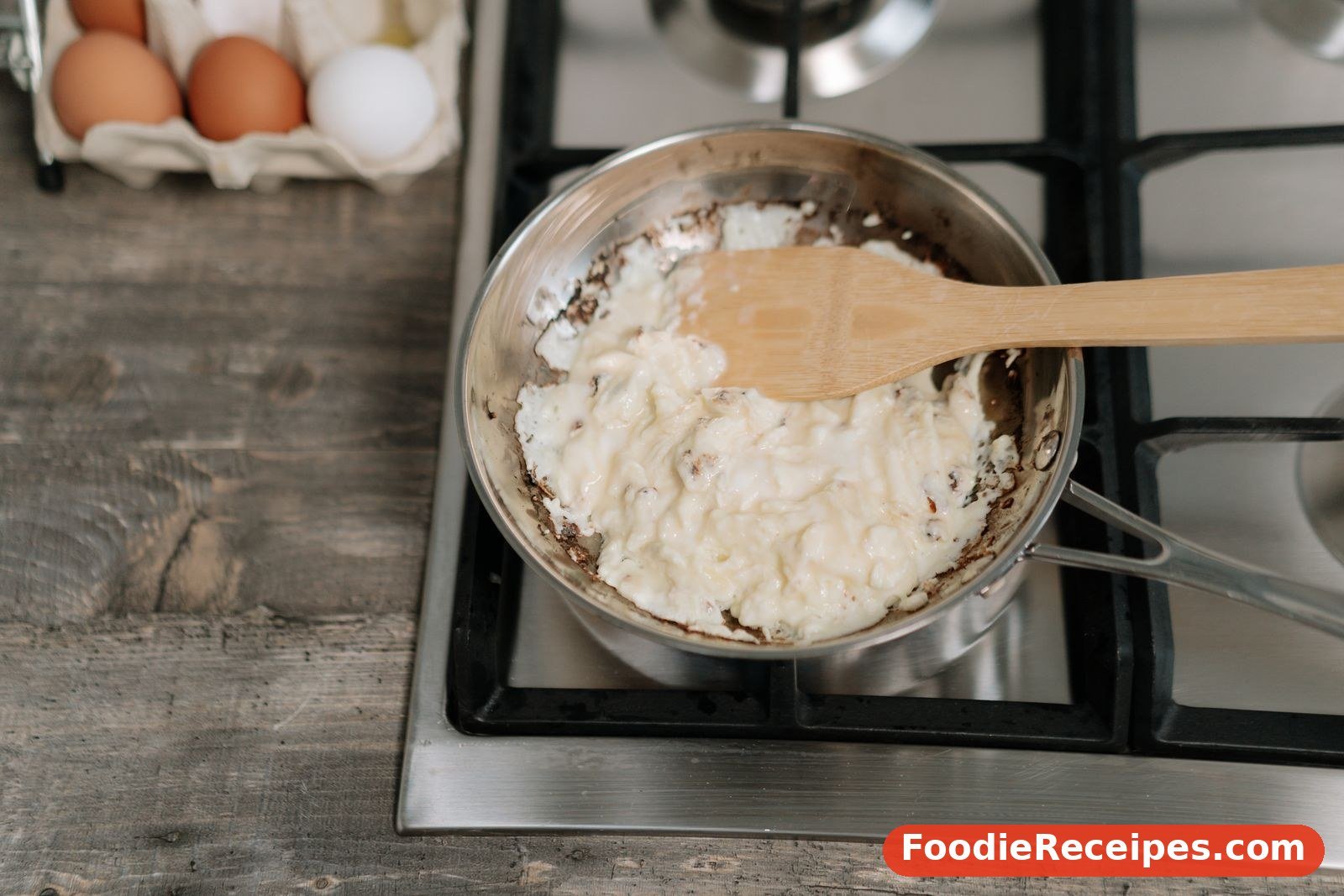
- 8 large eggs (about 400 g without shells)
- ½ cup (115 g) small-curd cottage cheese, whole-milk (4%) preferred
- ¼ teaspoon fine sea salt, plus more to taste (see the salting note below)
- ¼ teaspoon freshly ground black pepper, plus more to finish
- 1 tablespoon (14 g) unsalted butter (or 1 teaspoon neutral oil plus ½ tablespoon butter for flavor)
- 2 tablespoons (30 ml) whole milk or cream (optional, for extra softness)
- 1 tablespoon finely snipped fresh chives or sliced green onions, for garnish (optional but lovely)
Optional add-ins
- ¼ cup (28 g) shredded cheddar, Gruyère, or crumbled feta, folded in at the end
- 2 tablespoons finely diced ham or crumbled cooked bacon
- A handful of baby spinach, stirred in during the last minute until just wilted
- A pinch of smoked paprika or everything bagel seasoning to finish
- Hot sauce at the table
A note on salting: Salt draws moisture out of eggs if it sits on them, so the timing matters. For the softest eggs, whisk the salt in just before the eggs go into the pan — or season at the very end. Never salt raw eggs and let them sit for 15 minutes; they can turn watery and slightly grainy. In this recipe we whisk everything together and cook immediately, which sidesteps the issue entirely.
Step-by-Step Method
- Whisk the eggs and cottage cheese (2 minutes). Crack the eggs into a medium bowl. Add the cottage cheese, milk or cream if using, salt, and pepper. Whisk with a fork or whisk until the yolks and whites are fully blended and the mixture is uniform and slightly frothy — about 30–40 strokes. The cottage cheese curds will not disappear entirely; they will look like small white flecks throughout. That is exactly right — they melt during cooking.
- Warm the pan gently (1 minute). Place a good nonstick skillet (10- or 12-inch / 25–30 cm) over medium-low heat and add the butter. Let it melt and foam, swirling to coat the bottom and a little way up the sides. The butter should be melted and foaming but not browning. Low heat is the entire game with great scrambled eggs — if your pan is too hot at this stage, everything that follows suffers.
- Add the eggs and wait (30 seconds). Pour the egg mixture into the pan. Let it sit undisturbed for about 20–30 seconds, until a thin layer just begins to set around the edges. This brief pause gives the first curds something to build on.
- Push, fold, and repeat — slowly (4–6 minutes). With a heatproof silicone spatula, slowly push the eggs from the edge of the pan toward the center, letting the uncooked egg flow into the space you have cleared. Use long, slow strokes — about one push every few seconds — rather than frantic stirring. Large, soft folds are the goal. Continue gently pushing and folding, turning the pan occasionally, as soft curds form. The eggs should look creamy and slowly set, never sizzling aggressively. If they are cooking too fast, lift the pan off the heat for a few seconds. You are looking for a total cook time of about 5 to 7 minutes for eggs this soft — patience here is literally the recipe.
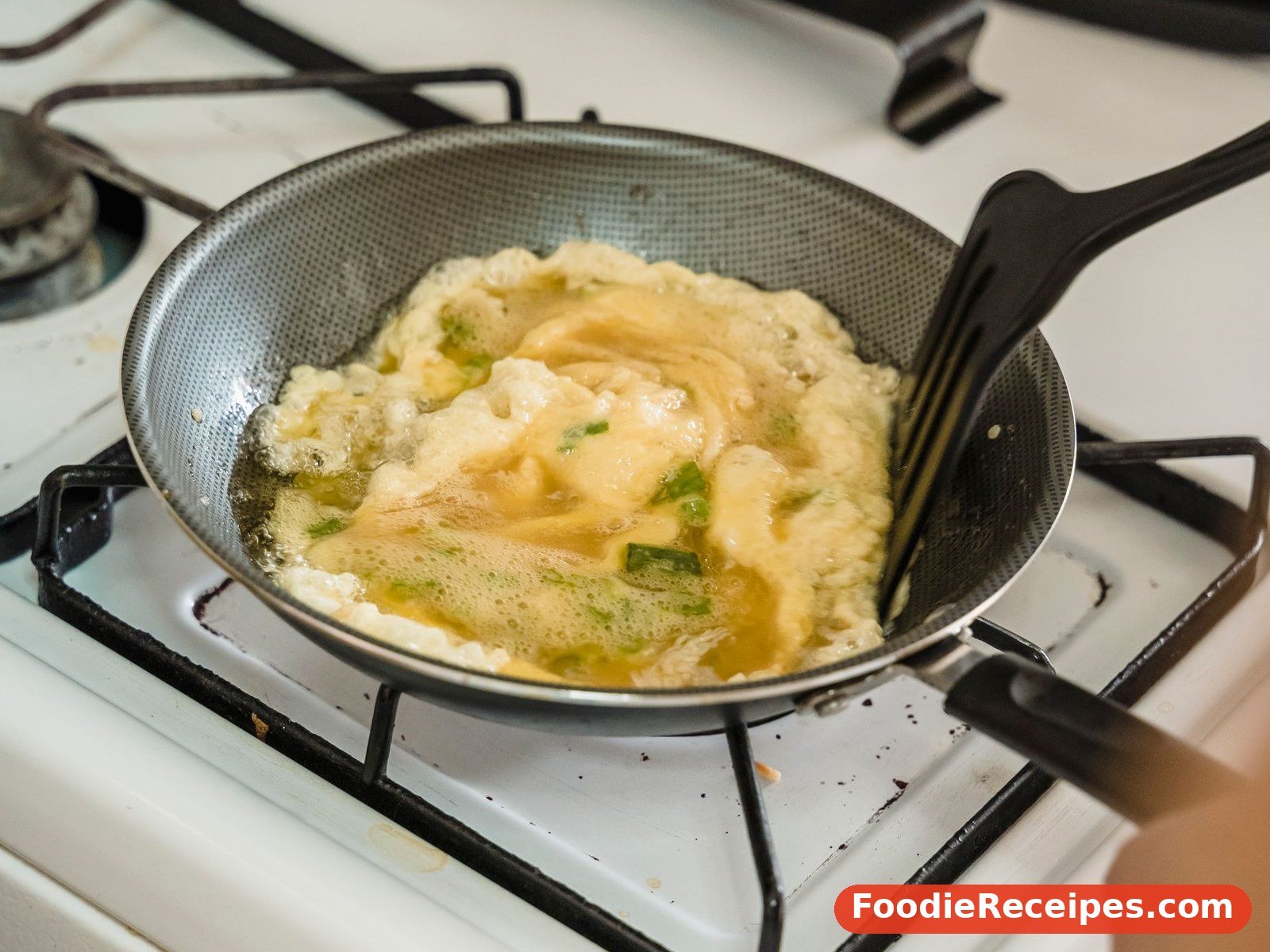
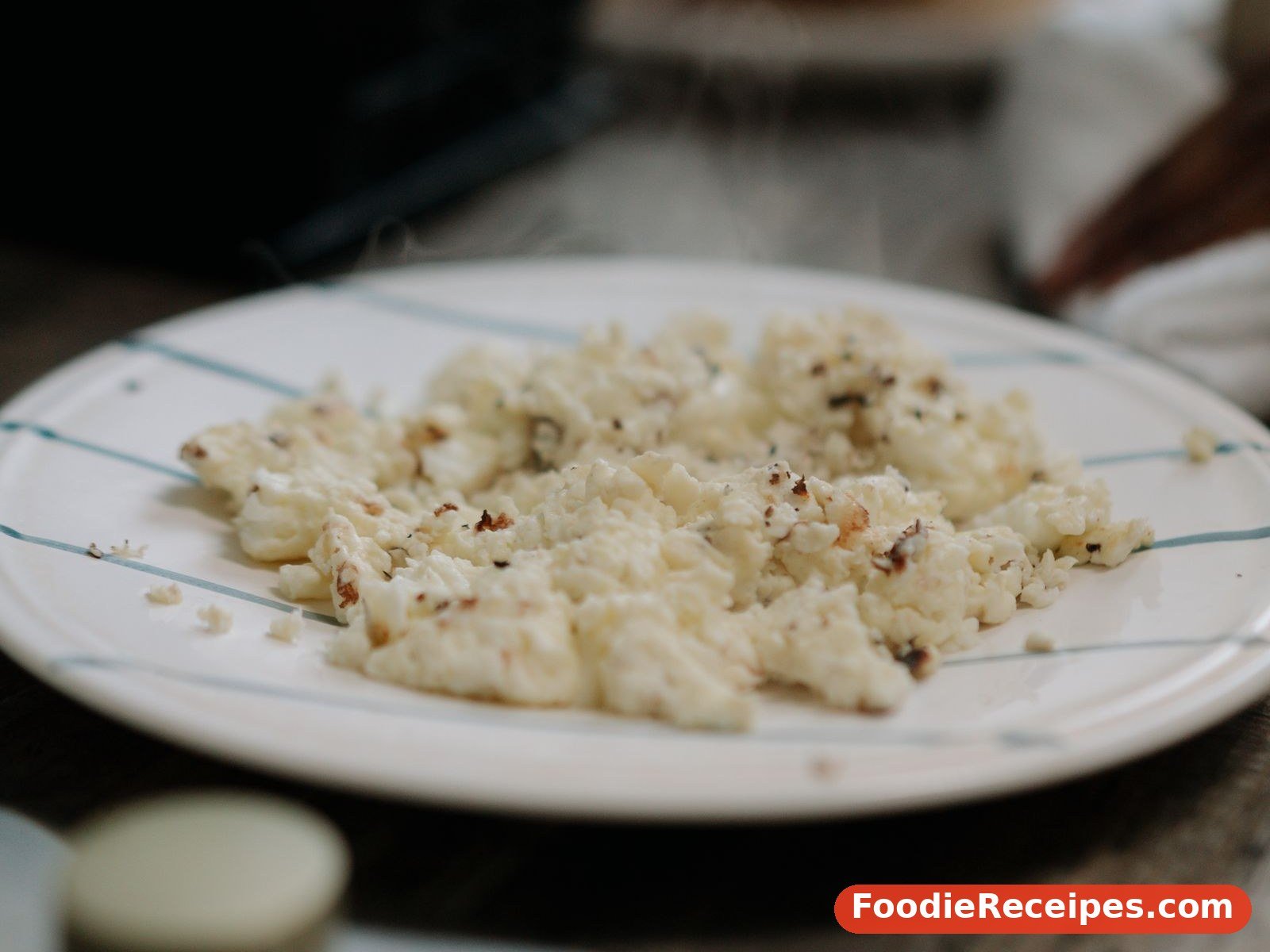
- Finish off the heat (30 seconds). When the eggs are mostly set but still look slightly wet and glossy — softer than you think they should be — remove the pan from the heat. Fold in any add-in cheese now if using. The residual heat of the pan finishes the cooking while you plate up; eggs taken off at the perfect moment are overcooked by the time they reach the table, because eggs keep cooking in their own heat. Trust the gloss: soft and shiny is the goal, and they will firm up to perfection in the minute it takes to serve.
- Serve immediately. Spoon the eggs onto warm plates (a quick rinse of the plates under hot water, then dried, keeps the eggs from cooling and tightening). Scatter with chives, finish with an extra crack of black pepper, and serve at once.
Tips for Perfect Results
- Low and slow is not a suggestion — it is the recipe. High heat makes eggs tough, watery, and sulfurous. Medium-low heat and a few extra minutes make them creamy. If your stove runs hot, use your smallest burner on its lowest setting.
- Use the right pan. A quality nonstick skillet lets you cook gently without the eggs welding themselves to the surface. Well-seasoned cast iron works too, but preheat it carefully and butter it generously.
- A silicone spatula beats a spoon. Its flexible edge sweeps the pan clean with every push, which means even cooking and no browned, crispy bits sneaking in — unless you like those, in which case let a few form on purpose.
- Do not walk away. Scrambled eggs go from perfect to overdone in under a minute at the end. Stay at the stove for the full five minutes; it is a short meditation with a delicious reward.
- Warm plates matter. Eggs lose heat fast. Warm plates keep them soft and glossy at the table instead of seizing up cold.
- Season at the table, too. A final pinch of flaky salt or a dash of hot sauce wakes everything up. Chives add freshness and color that make the plate look as good as it tastes.
- Scale with care. Cooking for two? Halve everything and use a smaller pan so the eggs stay in a thick enough layer to form proper curds. Cooking for a crowd? Cook in two batches rather than one giant one — a mountain of eggs cooks unevenly.
Variations and Substitutions
Extra-cheesy eggs: Fold ¼ cup (28 g) shredded sharp cheddar or Gruyère into the eggs during the final fold. The cottage cheese keeps them creamy while the cheddar brings bold flavor.
Southwest eggs: Add 2 tablespoons of finely diced bell pepper and a pinch of cumin to the pan butter for 1 minute before the eggs. Finish with pepper Jack cheese, cilantro, and salsa at the table.
Herb garden eggs: Stir in 2 tablespoons of mixed soft herbs — chives, parsley, dill, tarragon — at the very end. Delicate and very French in spirit.
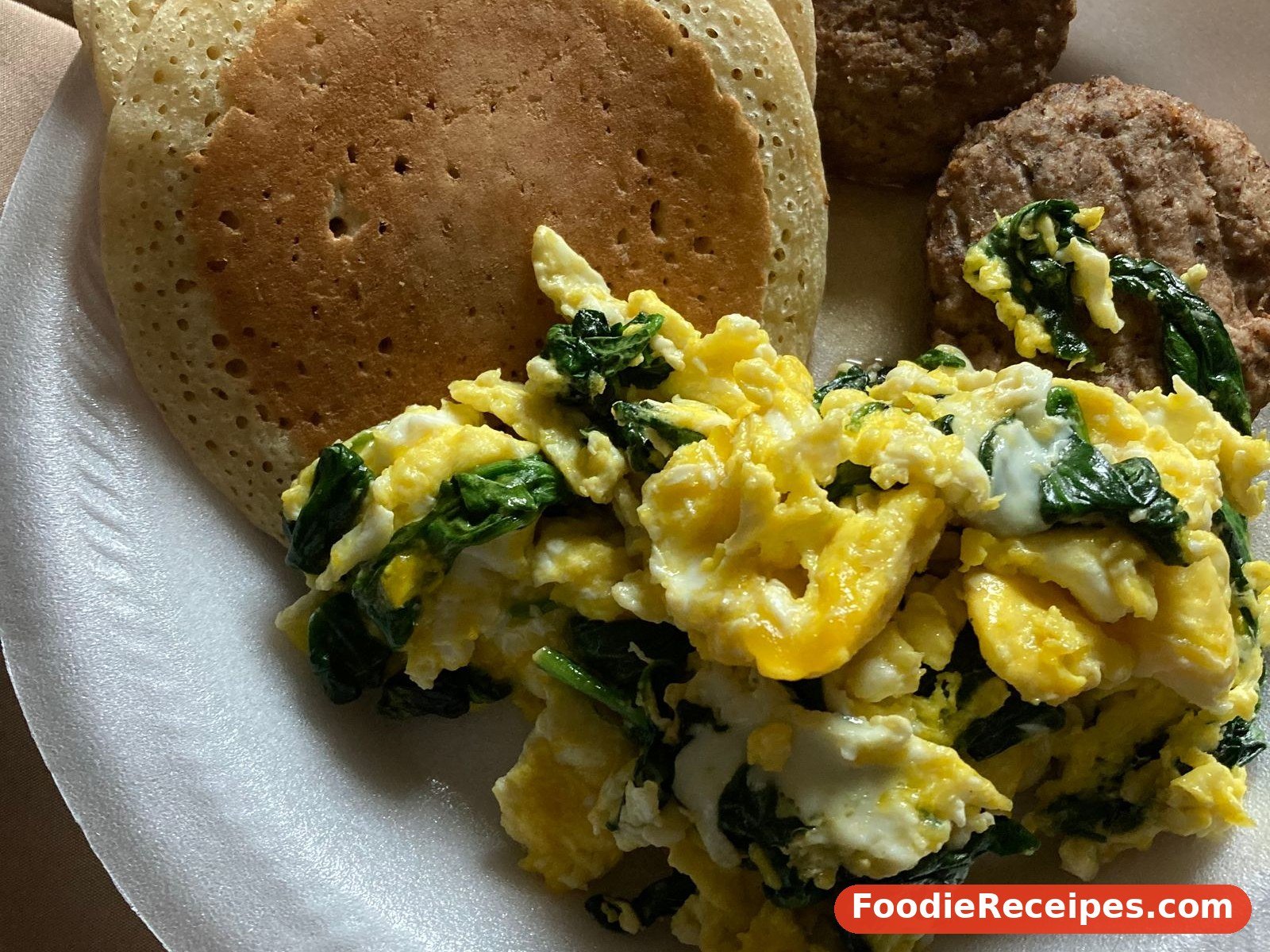
Spinach and feta: Wilt a handful of spinach in the pan first, pour off any liquid, then add the eggs. Crumble feta over the top to finish. Tangy, savory, and substantial.
No cottage cheese in the house? Ricotta is the closest substitute — use the same ½ cup (about 125 g) and expect an even richer, slightly sweeter egg. Greek yogurt (¼ cup / 60 g) works too, stirred in off the heat at the very end to avoid curdling. Plain cream cheese, softened and whisked in, gives a different but very pleasant richness.
Dairy-free eggs: Skip the cottage cheese and milk, cook in olive oil, and add 1 tablespoon of water per 2 eggs to the whisk — water creates steam that keeps the eggs fluffy. They will not be quite as creamy, but low and slow still makes them tender.
What to Serve With
These eggs are the soft, creamy center of a classic breakfast plate. Buttered toast — sourdough, white, or an English muffin — is essential for scooping. Crispy bacon, sausage links, or country ham provide the salty contrast. Hash browns or home fries add crunch, and a simple fruit salad or sliced melon keeps the plate fresh. For brunch, the eggs are wonderful on toast points topped with smoked salmon and dill, or spooned into warm tortillas with cheese for quick breakfast tacos. Coffee, of course, and orange juice for the table.
Serving and Storage
Serve scrambled eggs immediately — this is a dish with a five-minute window of perfection, and it does not hold gracefully. If you must keep them warm for late risers, hold them in a heatproof bowl set over a pot of barely simmering water for up to 15–20 minutes, stirring once or twice; expect them to firm up slightly.
Refrigerator: Leftover scrambled eggs keep for up to 2 days in an airtight container, though their texture will never quite match fresh. They are best repurposed — see below.
Freezer: We do not recommend freezing scrambled eggs on their own; they thaw watery and rubbery. (Breakfast burritos containing these eggs are the exception — they freeze beautifully, because the tortilla and cheese protect the eggs.)
Reheating and second lives: Reheat gently in a nonstick pan over low heat with a teaspoon of butter, stirring until just warm — or in the microwave at 50% power in 20-second bursts. Better yet, turn leftovers into something new: pile them onto toast with cheese under the broiler, fold them into fried rice, or tuck them into a breakfast sandwich with bacon on an English muffin.
Frequently Asked Questions
Can you actually taste the cottage cheese in the eggs?
Barely, and pleasantly. The curds melt in and read as general creaminess with a mild, fresh tang — most people just think the eggs are exceptionally rich. If you are serving a cottage-cheese skeptic, use small-curd and they almost certainly will not identify it.
Why did my eggs turn out watery?
Watery eggs usually mean the heat was too high (the proteins seized and squeezed out liquid) or the eggs were salted well before cooking. Cook low and slow, salt just before the pan, and remember to take the eggs off slightly underdone — they finish on residual heat.
How do I keep the eggs from sticking?
Use a nonstick pan in good condition, enough butter to coat it, and gentle heat. Eggs stick worst to screaming-hot pans and to scratched nonstick. A silicone spatula sweeping the bottom with each fold also prevents a stuck layer from building up.
Can I make these eggs in a bigger batch for a brunch crowd?
Yes, up to about 12 eggs in a 12-inch (30 cm) skillet — beyond that, cook in batches. A deep pan of eggs cooks unevenly and the bottom layer overcooks while the top is still raw. Two calm batches beat one chaotic one.
Are these eggs good for meal prep?
Scrambled eggs are at their best fresh, but the burrito route solves meal prep nicely: make a double batch, fill tortillas with the eggs, cheese, and sausage, wrap and freeze. Reheated in the microwave, they make an excellent grab-and-go breakfast all week.
What is the best cottage cheese to use?
Whole-milk (4%), small-curd, with a short ingredient list. It melts smoothly and tastes freshest. Large-curd works if that is what you have — the eggs will have slightly more distinct creamy pockets, which many people love.
Why do my scrambled eggs always overcook?
Almost everyone cooks them 30–60 seconds too long, because eggs continue setting in the hot pan and on the hot plate. Plate them when they still look a touch too soft and glossy — by the first bite, they will be exactly right.
Can I add vegetables to these eggs?
Yes — cook firm or watery vegetables (peppers, mushrooms, zucchini, onions) in the pan first until their moisture cooks off, then add the eggs. Adding raw watery vegetables directly makes the eggs weep.
A Final Word From Our Kitchen
Great scrambled eggs are a small act of care — five unhurried minutes that turn the plainest ingredients into the softest, most comforting plate of the day. The cottage cheese trick makes that result nearly foolproof: creamy every time, forgiving of a distracted moment, and quietly nourishing. Keep a tub of cottage cheese in the fridge and a gentle hand on the spatula, and your mornings will be better for it.