

Some casseroles are weeknight casseroles, and some taste like a holiday. This creamy chicken and stuffing casserole manages to be both. Under a golden, buttery cap of savory stuffing sits a rich filling of tender chicken and vegetables in a herbed cream sauce — every spoonful tastes a little like the best part of Thanksgiving dinner, the forkful where the turkey, gravy and stuffing all end up together. Yet it goes into the oven in about fifteen minutes of hands-on work, using a rotisserie chicken (or leftovers) and a bag of frozen vegetables you do not even have to thaw.
The genius of the dish is its two-layer logic. The creamy filling keeps the chicken moist and gives the vegetables a sauce to shine in, while the stuffing topping — moistened with broth and butter, then baked uncovered — turns crisp and golden on top and stays soft and savory underneath, exactly the way the best stuffing behaves next to gravy. It is the casserole to make when you want comfort without a whole holiday production: a chilly Tuesday, a friend who needs a meal, a Sunday when everyone wants seconds.
A note on the sauce: this version builds a quick homemade cream sauce with butter, flour, milk and broth, seasoned with sage and thyme so the whole dish sings with stuffing herbs. If your family’s tradition uses a can of cream of chicken soup, you will find that swap waiting in the variations — the casserole works both ways. Either way, the result is creamy, cozy and completely dependable.
Serves: 8 | Prep time: 15 minutes | Cook time: 35 minutes | Total time: 50 minutes
Ingredients
For the creamy chicken filling
- 4 cups (560 g) cooked chicken, shredded or cut into bite-size pieces (a rotisserie chicken is perfect)
- 3 cups (450 g) frozen mixed vegetables (peas, carrots, corn and green beans), no need to thaw
- 3 tablespoons (42 g) unsalted butter
- 1 small yellow onion, finely diced (about 1 cup / 150 g)
- 2 ribs celery, finely diced (about ¾ cup / 100 g)
- 2 cloves garlic, minced (about 2 teaspoons / 6 g)
- 3 tablespoons (24 g) all-purpose flour
- 1¼ cups (300 ml) low-sodium chicken broth
- ¾ cup (180 ml) whole milk (or half-and-half for extra richness)
- ½ cup (120 g) sour cream (optional but lovely — stir in at the end)
- ¾ teaspoon (4.5 g) fine sea salt, plus more to taste
- ½ teaspoon (1 g) ground black pepper
- ½ teaspoon (1 g) dried sage (or poultry seasoning)
- ½ teaspoon (1 g) dried thyme
- ¼ teaspoon (0.5 g) garlic powder
For the stuffing topping
- 1 box (6 oz / 170 g) chicken-flavored stuffing mix (about 3½ cups dry), or see the homemade option in the variations
- 1½ cups (360 ml) low-sodium chicken broth, hot
- 4 tablespoons (56 g) unsalted butter, melted
- 1 tablespoon (4 g) chopped fresh parsley, for serving (optional)
Step-by-Step Method
- Heat the oven and prepare the dish. Preheat your oven to 375°F (190°C) and lightly grease a 9 × 13 inch (23 × 33 cm) baking dish. Put the broth for the stuffing on to warm (a kettle or a small saucepan) — hot broth moistens the stuffing evenly and starts it absorbing right away.
- Soften the onion and celery (4–5 minutes). In a large skillet or Dutch oven, melt the butter over medium heat. Add the onion and celery and cook until soft and sweet, about 4–5 minutes. Add the garlic and cook 30 seconds more. These aromatics echo the flavors inside the stuffing mix and make the sauce taste homemade through and through.
- Make the cream sauce (4–5 minutes). Sprinkle the flour over the vegetables and stir constantly for 1 minute. Slowly pour in the chicken broth while stirring, then the milk, and keep stirring until smooth. Simmer gently for 3–4 minutes until the sauce thickens enough to coat the back of a spoon. Stir in the salt, pepper, sage, thyme and garlic powder. Remove the pan from the heat and stir in the sour cream, if using, until smooth.
- Fold in the chicken and frozen vegetables (2 minutes). Add the cooked chicken and the frozen mixed vegetables straight from the bag to the sauce. Fold everything together until evenly coated. The vegetables will thaw and cook through in the oven, and keeping them frozen now means they will still have a pleasant bite at serving time. Taste and adjust the salt — the stuffing topping is salty, so season the filling just to the edge of enough.
- Fill the dish (2 minutes). Scrape the filling into the prepared baking dish and spread it into an even layer, pushing it into the corners.
- Prepare the stuffing topping (3 minutes). In a medium bowl, combine the dry stuffing mix with the hot broth and the melted butter. Stir once or twice with a fork, then let it stand for 2–3 minutes so the crumbs absorb the liquid and swell. Fluff with the fork — the stuffing should be moist throughout but not wet or soupy; if it looks dry, add broth a tablespoon at a time.

- Top the casserole (2 minutes). Spoon the stuffing evenly over the filling and spread it gently to the edges. Do not pack it down: loose, craggy stuffing with lots of little peaks is what bakes up crisp and golden.
- Bake until golden and bubbling (30–35 minutes). Bake, uncovered, for 30–35 minutes, until the filling is bubbling up around the edges and through the middle, and the stuffing topping is deep golden brown with crisp peaks. If the top browns too quickly, tent loosely with foil for the last 10 minutes.
- Rest and serve (10 minutes). Let the casserole rest for 10 minutes so the sauce settles and thickens a little — scoops will hold together much better. Scatter parsley over the top if you like, and serve hot, making sure each portion gets both creamy filling and golden stuffing.
Why It Tastes Like a Holiday
It is worth understanding why this simple casserole punches so far above its weight, because the same logic will help you improvise your own versions. Thanksgiving flavor is not really about turkey — it is about a specific family of tastes working together: sage, thyme, celery and onion (the aromatics inside every classic stuffing), rich poultry broth, butter, and something creamy and gently tangy underneath it all. This casserole layers exactly those flavors. The sauce carries the sage and thyme, the onion and celery are cooked twice — once in the sauce and once inside the stuffing mix — and the cranberry sauce most of us instinctively serve alongside supplies the bright contrast the plate is asking for.
The texture does the rest of the work. A great holiday plate is a study in contrasts: crisp-edged stuffing against soft, saucy filling, tender chicken against vegetables with a little bite left. By keeping the stuffing loose and baking uncovered, and by adding the vegetables frozen so they do not go soft, this recipe preserves those contrasts instead of steaming them into sameness. That is why a fifteen-minute assembly can taste like an all-day dinner — the building blocks are simple, but they are arranged the way a holiday cook arranges them.
Tips for Perfect Results
- Keep the stuffing loose. Fluff it, spoon it, level it — but never press it down. Compressed stuffing bakes into a dense slab; loose stuffing with peaks and valleys turns crisp on top and stays tender underneath.
- Mind the salt balance. Boxed stuffing mix and rotisserie chicken are both salty on their own. Use low-sodium broth and taste the filling before adding much salt, then adjust at the end.
- Hot broth, evenly moist. Cold broth dumped on stuffing mix hydrates it in patches, leaving dry crunchy bits and soggy bits side by side. Hot broth plus a short stand gives an even, spoonable texture.
- Do not thaw the vegetables. They release their moisture into the sauce as they bake, which is exactly what a creamy casserole wants. Thawed vegetables added early can turn soft and dull before the dish is done.
- Let the filling bubble in the center, not just the edges. The center is the last place to get hot; a lazy bubble through the stuffing is your sign the sauce has thickened and the chicken is steaming hot throughout.
- Shred chicken by hand into bite-size pieces. Very small shreds disappear into the sauce; nice chunks give the casserole substance. Rotisserie chicken pulled into rustic pieces is ideal.

Variations and Substitutions
- The canned-soup shortcut: Replace the homemade sauce with one can (10.5 oz / 298 g) of cream of chicken soup whisked with ½ cup (120 ml) of milk and the herbs; skip the butter, flour and broth in the sauce. It is the classic busy-night version and it works.
- Homemade stuffing topping: Cube 6 cups (about 300 g) of day-old bread, toss with the melted butter plus 1 teaspoon of poultry seasoning and a pinch of salt, and moisten with the hot broth as directed. Cornbread stuffing mix is wonderful here too.
- Turkey and stuffing casserole: Use leftover roast turkey and any leftover gravy you have — replace half the broth in the sauce with gravy for a true day-after-Thanksgiving bake.
- Broccoli cheddar version: Swap the mixed vegetables for 3 cups (270 g) of frozen broccoli florets and stir 1 cup (110 g) of shredded cheddar into the sauce.
- Mushroom and green bean: Use frozen green beans and a cup of sautéed mushrooms for a filling that leans toward green bean casserole territory — in a good way.
- Add cranberry: A handful of dried cranberries folded into the stuffing (about ⅓ cup / 45 g) adds little sweet-tart pops that are very holiday-appropriate.
- Gluten-free: Use a gluten-free stuffing mix (widely available) and thicken the sauce with 1½ tablespoons of cornstarch whisked into the cold milk instead of flour.
What to Serve With Chicken and Stuffing Casserole
This casserole is nearly a whole meal in itself, so its best partners are fresh and simple. Cranberry sauce — the jellied kind or whole-berry — is the classic accompaniment, its sweet tartness made for creamy, herby chicken. A crisp green salad, cucumber salad, or steamed green beans with lemon keeps the plate balanced. For a full holiday-style spread, add mashed potatoes (for the extra sauce), glazed carrots, and dinner rolls. Applesauce is a quiet old-fashioned favorite on the side. Sweet tea or apple cider to drink, and something light and fruity for dessert.
Serving and Storage
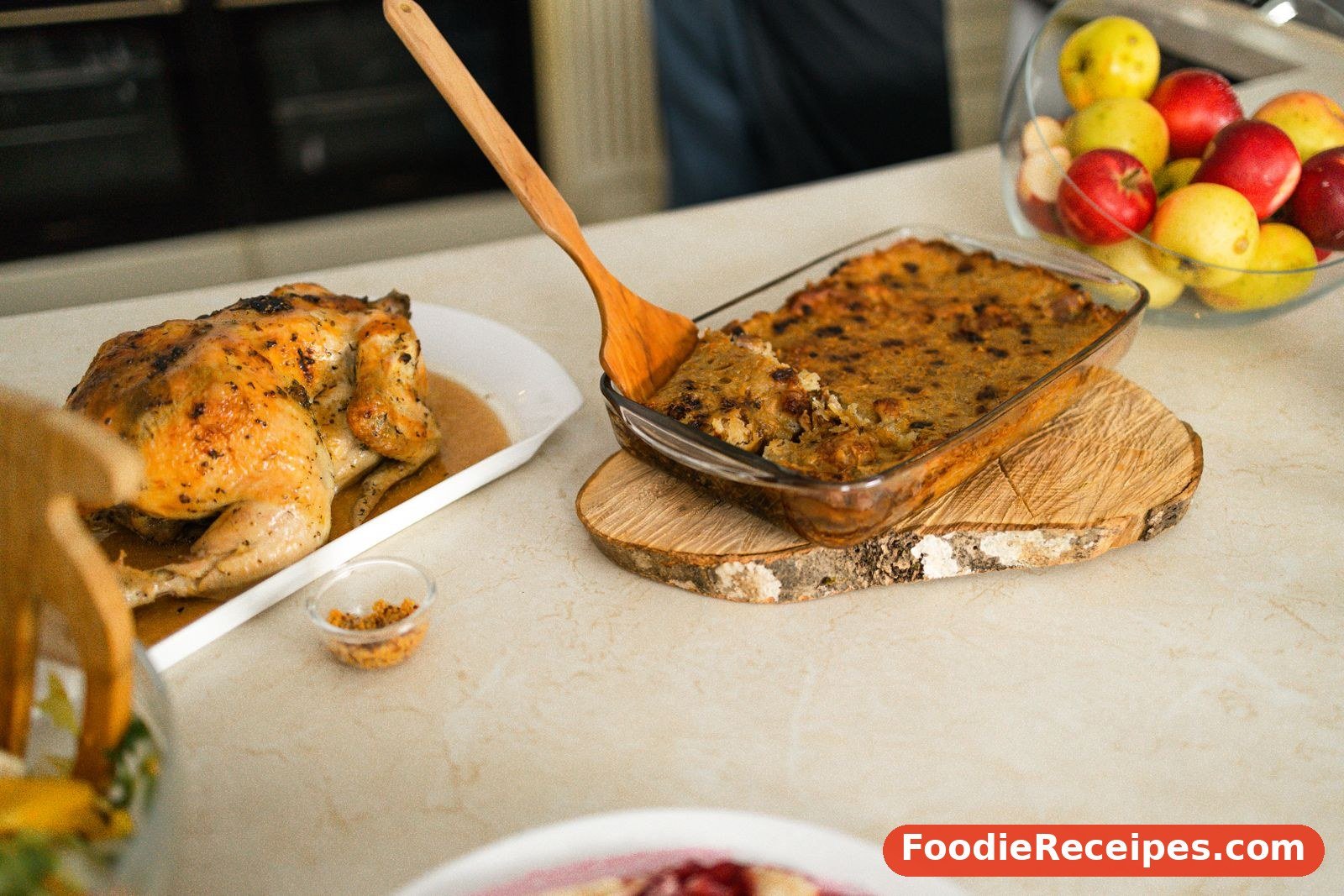
Serve generous scoops with both layers — golden stuffing riding on creamy chicken — straight from the dish. Leftovers keep, covered, in the refrigerator for up to 4 days.
Reheat individual portions in the microwave for 2–3 minutes. The stuffing will soften in storage; to revive it, reheat in the oven at 350°F (175°C) for 15–20 minutes, or in an air fryer at 375°F (190°C) for about 5 minutes, until the top crisps again. A spoonful of broth sprinkled over the filling before reheating keeps it saucy.
To freeze, bake and cool the casserole completely, wrap it tightly, and freeze for up to 3 months. Thaw overnight in the refrigerator and reheat in the oven as above. Freezing the unbaked casserole is less ideal because the stuffing absorbs the sauce in storage and loses its texture — if you need to prep ahead, keep the filling and the dry stuffing separate and assemble the day you bake. That make-ahead path is easy: the filling holds up to 24 hours in the fridge, and the stuffing takes three minutes to moisten when you are ready. Bake as directed, adding about 5 minutes if the filling went in cold.
Frequently Asked Questions
Can I use raw chicken instead of cooked?
The recipe is written for cooked chicken because raw chicken releases juices that thin the sauce and make timing tricky. If raw is what you have, cut 1½ pounds (680 g) of boneless chicken into bite-size pieces, season, and sauté it in the skillet until cooked through (165°F / 74°C) before making the sauce in the same pan — the browned bits add flavor to the sauce.
Which frozen vegetables work best?
The classic mixed vegetables — peas, carrots, corn and green beans — are traditional and colorful. Frozen broccoli florets, a pea-and-carrot blend, or frozen green beans alone all work. Avoid watery vegetables like frozen zucchini, which can thin the sauce.
My stuffing topping came out soggy. Why?
Either the stuffing was moistened too much (it should be damp, not wet), it was packed down flat, or the casserole sat assembled too long before baking, letting the stuffing drink the sauce. Assemble just before baking, keep the stuffing loose and craggy, and bake uncovered.
Can I use leftover homemade stuffing instead of the mix?
Yes — use about 4 cups (about 500 g) of prepared stuffing. If it is already moist, skip the broth-and-butter moistening step and spoon it straight on top; if it is dry and crumbly, moisten it with a few spoonfuls of hot broth first.
Is the sour cream necessary?
No, it is marked optional. It adds a gentle tang and extra silkiness to the sauce. Without it, the sauce is still creamy — add a squeeze of lemon juice (about 1 teaspoon) if you miss the brightness.
Can I make this in a smaller dish?
Halve everything and bake in an 8 × 8 inch (20 × 20 cm) dish for about 25–30 minutes. It is a sensible size for smaller households, and leftovers reheat just as well.
Can I cook this in a slow cooker?
You can, with softer stuffing as the trade-off. Put the filling in a greased slow cooker, top with the moistened stuffing, and cook on LOW for 3½–4 hours, until bubbling. For the last 30 minutes, crack the lid so steam escapes and the top firms up a little. It will not be crisp like the oven version, but the flavors are all there, and it is a kind way to have dinner waiting after a long day.
How do I know the casserole is done?
The filling should be bubbling not just at the edges but in lazy bubbles up through the center, the stuffing should be deep golden and crisp on its peaks, and a thermometer in the center of the filling should read at least 165°F (74°C) since everything is being reheated together.
Closing
Creamy chicken and stuffing casserole is the taste of a holiday dinner without the holiday — tender chicken and vegetables in a herbed cream sauce under a golden, buttery stuffing roof, on the table in under an hour. It uses up leftovers gracefully, feeds a crowd kindly, and asks almost nothing of the cook. Keep a bag of frozen vegetables and a box of stuffing in the pantry, and this comfort is never more than one rotisserie chicken away.