
Long before anyone thought to blanket them in marshmallows, Southern cooks candied their sweet potatoes the simple way: sliced thick, layered in a heavy skillet, and simmered slowly in butter, brown sugar, and warm spices until the syrup turned to amber and every slice glistened like it had been dipped in caramel. The marshmallow topping is a twentieth-century marketing idea; the skillet of candied sweet potatoes bubbling on the back of the stove is much, much older — and, plenty of Southerners will tell you, considerably better.
This recipe is for the purists and the curious alike: no marshmallows, no casserole topping, nothing between you and the potatoes except a glossy, buttery glaze with cinnamon, nutmeg, and a hint of vanilla. As the slices simmer, two things happen at once. The sugar syrup draws moisture out of the potatoes and thickens into a glaze, and the potatoes drink the sweet, spiced butter back in, becoming tender, rich, and almost translucent at the edges. It is a side dish that behaves like dessert’s respectable older sibling — welcome at Thanksgiving and Christmas, but just as at home next to a Tuesday pork chop.
The technique is gentle and mostly hands-off, but it rewards attention to a few details: slices of even thickness so they finish together, a wide skillet so the syrup can reduce, and the patience to let the glaze thicken by itself rather than drowning the potatoes in water. Do it right and the syrup will sheet off a spoon and the potatoes will hold their shape while melting in the middle — exactly as they should.
Serves: 6–8 as a side dish | Prep time: 15 minutes | Cook time: 45–55 minutes | Total time: about 1 hour 10 minutes
Ingredients
- 3½ lb (1.6 kg) sweet potatoes — about 4 medium-large potatoes, firm and heavy for their size
- ½ cup (115 g) unsalted butter, cut into pieces (salted butter also works; reduce the added salt slightly)
- 1 cup (200 g) packed dark brown sugar (light brown sugar works; the glaze will be paler and milder)
- ¼ cup (50 g) granulated sugar (adds body to the syrup and helps it set glossy)
- ½ cup (120 ml) water (orange juice is a fine, traditional swap — see variations)
- 1 teaspoon (3 g) ground cinnamon
- ¼ teaspoon (0.75 g) ground nutmeg, freshly grated if you can
- ¼ teaspoon (0.5 g) ground ginger (optional, for quiet warmth)
- ½ teaspoon (3 g) fine salt — do not skip it; salt is what keeps the glaze from tasting flat
- 1 teaspoon (5 ml) vanilla extract, added at the end
- 1 teaspoon (5 ml) fresh lemon juice (optional, brightens the sweetness)
- Flaky sea salt or a small pinch of extra cinnamon, to finish (optional)
Choosing Sweet Potatoes
For candying, choose the familiar orange-fleshed, copper- or rose-skinned sweet potatoes (often labelled “garnet” or “jewel” in shops, and confusingly sold as “yams” in many American stores, though true yams are a different vegetable entirely). They are moist, sweet, and turn silky when cooked — exactly what a glaze wants. Pale, tan-skinned sweet potatoes with yellow flesh are drier and starchier and make a less luscious dish. Pick potatoes that are firm, unblemished, and similar in size so your slices cook evenly, and avoid any with soft spots, mould at the ends, or a fermented smell.
Why There Are Two Sugars
Dark brown sugar brings molasses depth and the classic amber colour; a smaller amount of white granulated sugar helps the syrup thicken and set into a shiny, candy-like glaze instead of staying thin and runny. It is a small baker’s trick that makes a visible difference in how the syrup clings. If you prefer, you can use all brown sugar (1¼ cups / 250 g total) — the potatoes will still be delicious, with a slightly softer-set glaze.
Step-by-Step Method
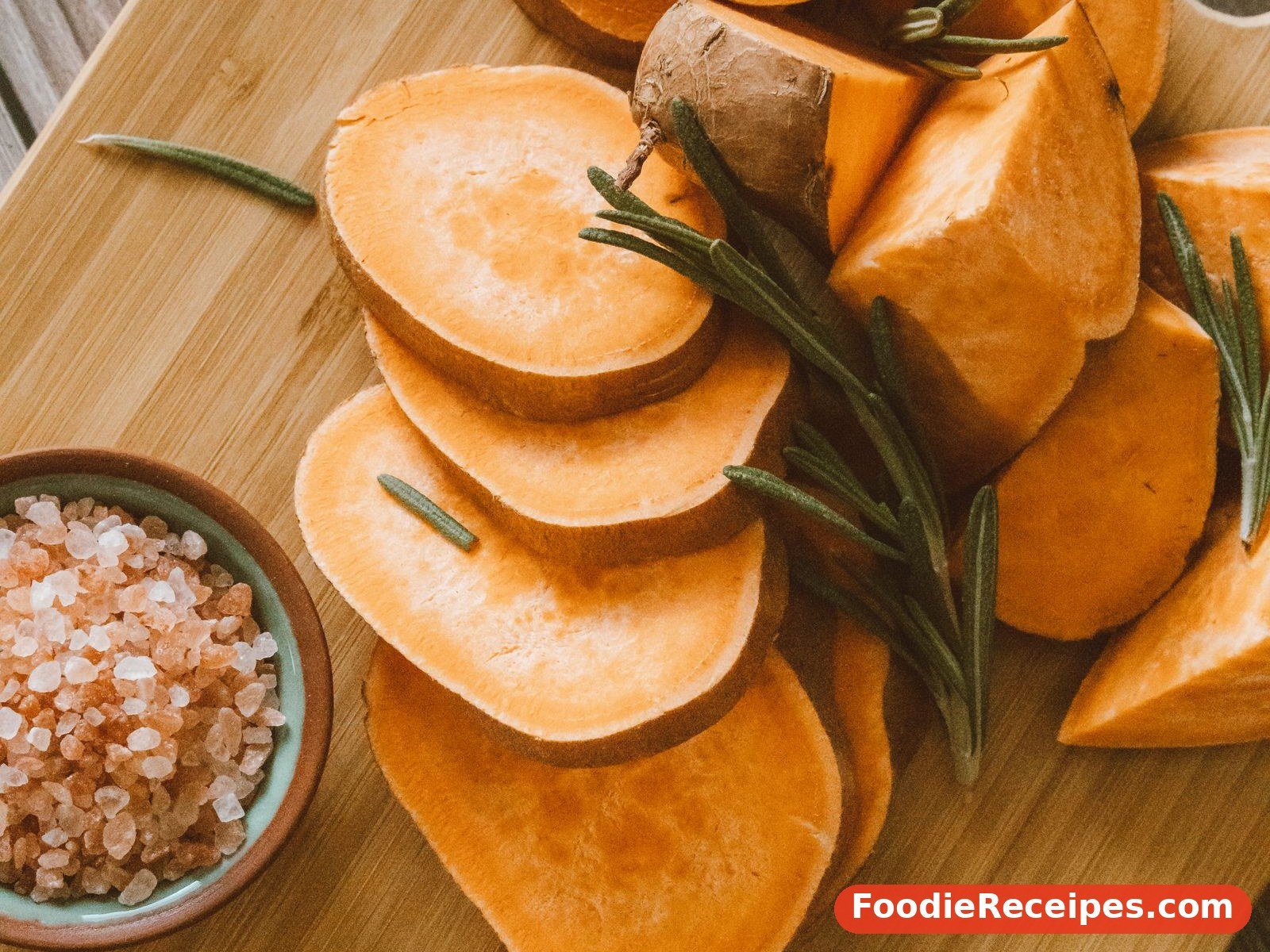
- Peel and slice the potatoes (10 minutes). Peel the sweet potatoes and trim the pointed ends. Slice them crosswise into rounds about ½ inch (1.3 cm) thick — thick enough to stay intact through a long simmer, thin enough to cook through and absorb the glaze. Try to keep the slices even; uneven slices mean some turn to mush while others stay firm. If you are working ahead, hold the slices in cold water so they do not darken, but drain and pat them dry before they go into the pan.
- Start the syrup (3–4 minutes). Set a large, wide, heavy skillet — cast iron is ideal, 12 inches (30 cm) across — over medium heat. Add the butter and let it melt. Stir in the brown sugar, granulated sugar, water, cinnamon, nutmeg, ginger (if using), and salt. Cook, stirring, until the sugar has dissolved and the mixture comes to a gentle, bubbling simmer, 3–4 minutes. It will look thin at this stage; that is correct — the potatoes’ moisture joins it, and it thickens as it reduces.
- Layer in the potatoes (3 minutes). Arrange the sweet potato slices in the skillet in overlapping layers, like shingles, spooning a little of the syrup over each layer as you go so every slice gets its share. A single snug layer is ideal if your skillet is wide enough; two shallow layers are fine. Avoid piling them deep — potatoes buried three or four layers down cook unevenly and barely see the glaze.
- Simmer low and covered (25 minutes). Reduce the heat to low, so the syrup bubbles lazily rather than boiling hard, and cover the skillet with a lid. Simmer for 25 minutes. During this time the potatoes soften and release their juices and the syrup thins before it thickens — resist the urge to stir, which breaks the slices. If you need to move them, gently shift the skillet or nudge slices with a spoon once, halfway through.
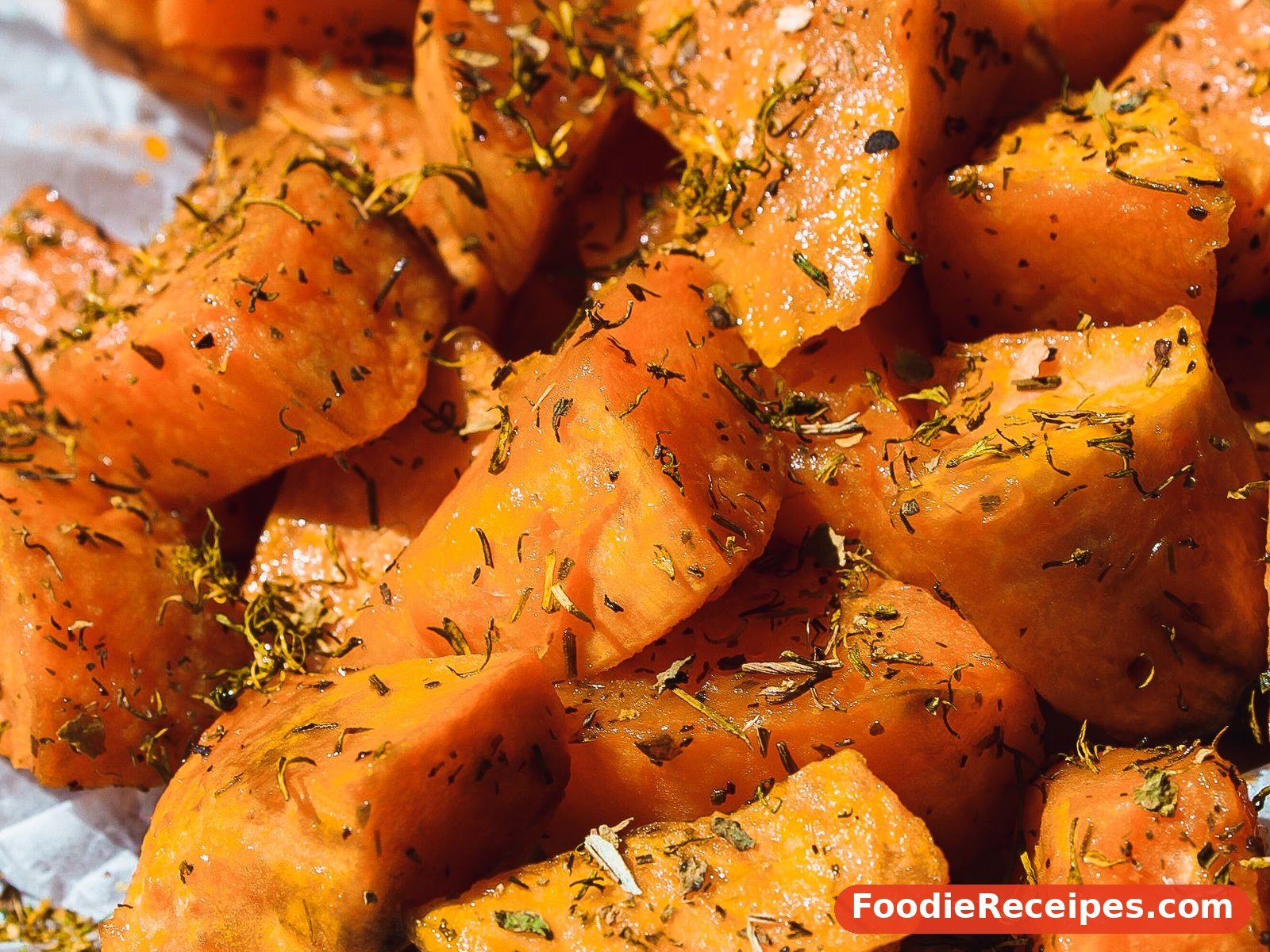
- Uncover and reduce (15–20 minutes). Remove the lid and continue simmering gently for 15–20 minutes, until the syrup has reduced and thickened into a glossy glaze that coats the back of a spoon and leaves a clear trail when you drag the spoon across the pan. Baste the potatoes with the syrup every few minutes during this stage, spooning glaze over the tops — this is what gives the slices their lacquered shine. Gently turn the slices once, if you can do it without breaking them, so both sides get glazed.
- Check for tenderness (1 minute). Pierce a thick slice with the tip of a knife. It should slide in with almost no resistance and the slice should hold its shape when lifted. If the potatoes are tender but the syrup is still thin, lift the potatoes to a warm serving dish with a slotted spoon and boil the syrup alone for 2–3 minutes to thicken it, then pour it back over.
- Finish with vanilla (1 minute). Take the skillet off the heat. Stir the vanilla extract (and lemon juice, if using) into the glaze — vanilla goes in off the heat so its aroma survives. Let the potatoes rest in the glaze for 5 minutes; the syrup will set a little more as it cools toward serving temperature.
- Serve. Spoon the potatoes into a warm serving dish, pouring every drop of glaze over the top — the glaze is the whole point. Finish with a tiny pinch of flaky salt or an extra dusting of cinnamon if you like, and serve hot.
Tips for Perfect Results
- Slice evenly, and not too thin. Half-inch (1.3 cm) rounds are the sweet spot. Thin slices dissolve into sweet mush during the long simmer; very thick slices stay firm in the centre after the glaze is ready.
- Low and slow is the law. A hard boil breaks the slices apart and can scorch the sugar. The syrup should barely bubble — if it is bubbling energetically, your heat is too high.
- Reduce the glaze at the end, not the beginning. The covered simmer first is what cooks the potatoes through; the uncovered simmer is what turns syrup into glaze. Skipping the covered stage gives you raw-centred potatoes in a nice sauce.
- Baste for shine. Spooning the hot glaze over the tops of the slices during the last stage lacquers them. A candied sweet potato should glisten when it reaches the table.
- Salt is a flavour, not an afterthought. That half-teaspoon of salt will not make the dish salty — it deepens the brown sugar, sharpens the spices, and keeps the sweetness from tasting one-dimensional. Taste the glaze before serving and adjust.
- Watch the last five minutes. Sugar syrups go from perfect to scorched quickly once thickened, especially in cast iron, which holds heat fiercely. Stay nearby at the end, and pull the pan off the burner a shade early if the glaze is coating a spoon — it will thicken further as it rests.
Variations and Substitutions
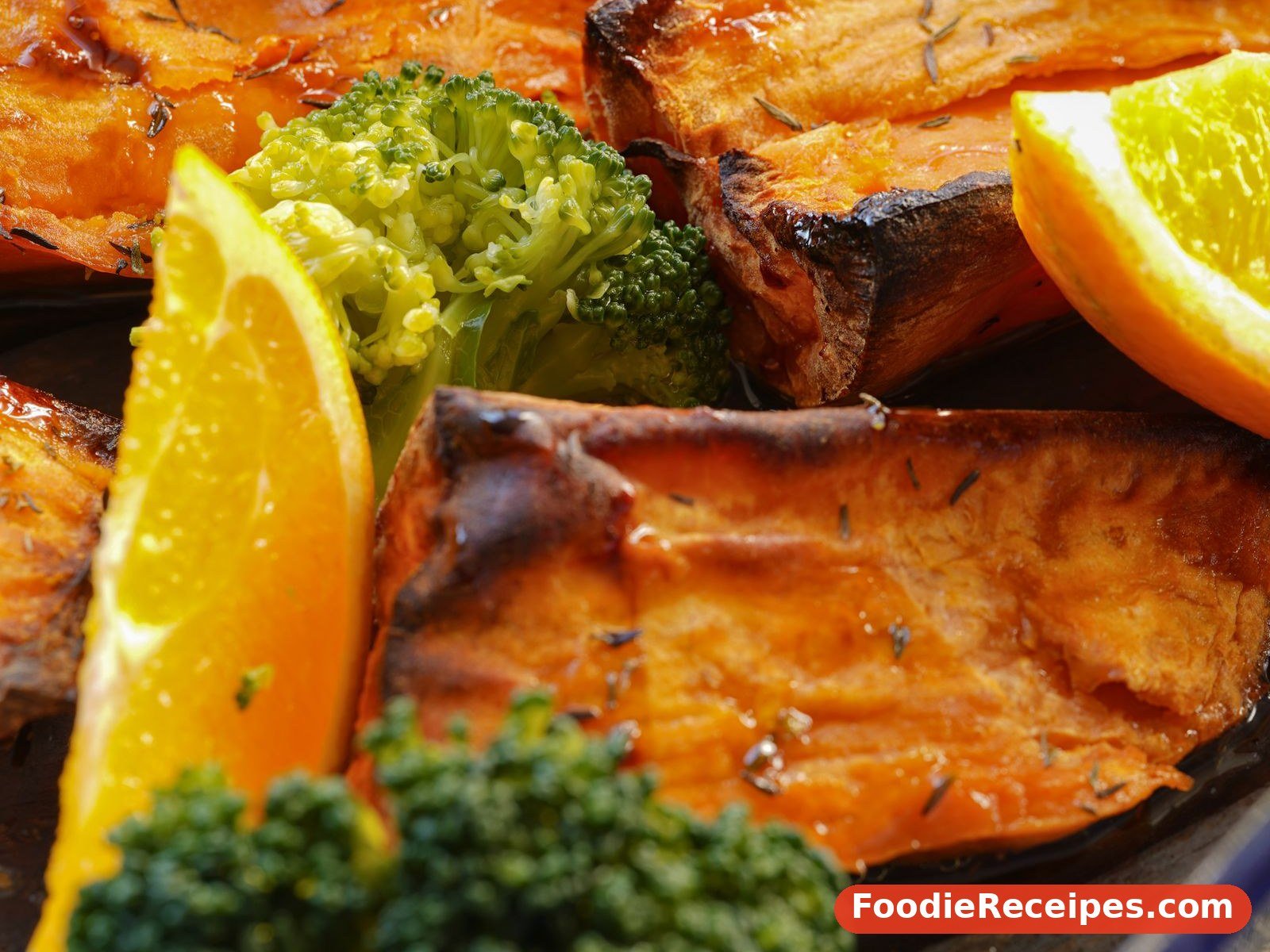
- Oven-baked candied sweet potatoes. Layer the slices in a buttered baking dish, pour the hot syrup over, cover with foil, and bake at 375°F (190°C) for 30 minutes. Uncover, baste, and bake 20–25 minutes more, until glazed and tender. A good option when the stove is crowded at holidays.
- Orange-glazed sweet potatoes. Replace the water with ½ cup (120 ml) of orange juice and add 1 teaspoon of finely grated orange zest to the syrup. The gentle acidity balances the sweetness beautifully.
- Bourbon or maple finish. Stir 1 tablespoon (15 ml) of bourbon into the glaze with the vanilla, or swap ¼ cup (60 ml) of the brown sugar for real maple syrup for a deeper, woodsy sweetness.
- Pecan-topped (still no marshmallows). Scatter ½ cup (55 g) of toasted chopped pecans over the finished dish. You get the crunch and celebration of a topping without a marshmallow in sight.
- Spiced-up version. Add a pinch of cayenne or a few grinds of black pepper to the syrup — the faint heat against the sweet glaze is an old Southern trick and startlingly good.
- Sweet potato chunks or wedges. Cut the potatoes into 1-inch (2.5 cm) chunks or lengthwise wedges instead of rounds. Chunks need a few extra minutes; wedges make a handsome presentation for a plated dinner.
- Less-sweet version. Reduce the brown sugar to ¾ cup (150 g) and leave out the granulated sugar. The glaze will be thinner and the potato flavour more prominent — some families prefer it this way year-round.
What to Serve With
Candied sweet potatoes are a cornerstone of the Southern holiday table: they sit happily beside roast turkey, baked ham (the salty ham and sweet glaze are one of the great pairings), fried chicken, and smothered pork chops, with collard greens, green beans, cornbread dressing, and macaroni and cheese filling out the spread. Outside the holidays, they are excellent with grilled or roasted pork, baked chicken thighs, and meatloaf. Because they are rich and sweet, give them crisp or savoury company — something green, something salty, something with a little crunch — and the plate balances itself.
Serving and Storage
Serve candied sweet potatoes hot or warm, straight from the skillet or spooned into a warmed dish with all their glaze. They can be held, covered, in a low oven at 200°F (95°C) for up to an hour, which makes them a relaxed holiday side. If the glaze thickens too much while holding, stir in a spoonful of hot water.
In the fridge: Store leftovers, potatoes and glaze together, in an airtight container for up to 4–5 days. The glaze will set firm in the fridge and melt again on reheating.
In the freezer: Candied sweet potatoes freeze reasonably well for up to 3 months, though the texture softens somewhat. Freeze in a sealed container with the glaze, thaw overnight in the fridge, and reheat gently. They will be softer than fresh but still very good — a fine candidate for turning into the leftover ideas below.
To reheat: The gentlest way is a covered skillet over low heat with a splash of water, basting until the glaze loosens and shines again, about 8–10 minutes. In the oven, cover the dish with foil and warm at 325°F (165°C) for 15–20 minutes. The microwave works for small portions — cover, use medium power, and stir the glaze once so it melts evenly.
Leftover ideas: Mash leftovers into a sweet potato casserole base, blend them into pancake or waffle batter, stir them into oatmeal, or warm them and serve over vanilla ice cream — the spiced brown sugar glaze becomes a sauce, and no one will believe it started as a side dish.
Frequently Asked Questions
Why no marshmallows — is that really traditional?
Yes. Sweet potatoes were candied in sugar syrup in Southern kitchens long before marshmallows became a common grocery item in the early twentieth century; the marshmallow topping was popularised later by candy companies’ recipe campaigns. The skillet-glazed version is the older dish, and many Southern families never adopted the topping at all.
Can I make candied sweet potatoes ahead of time?
Very easily — they are one of the best make-ahead holiday sides. Cook them completely, cool, and refrigerate in their glaze for up to 2 days. Reheat gently in a covered skillet or a low oven, adding a spoonful of water to loosen the glaze. The flavour actually deepens overnight.
My glaze is watery and won’t thicken. What went wrong?
Usually the potatoes released more juice than expected and the reduction stage was cut short. Lift the potatoes out with a slotted spoon and simmer the syrup alone over medium heat for 3–5 minutes until it coats a spoon, then return the potatoes and baste. Also check that you simmered uncovered for the full final stage — the lid traps the steam you are trying to cook off.
Can I use canned sweet potatoes or yams?
You can, in a pinch. Drain two 29 oz (about 820 g) cans well, make the syrup as directed, and simmer the drained potatoes in it for just 12–15 minutes, basting gently — canned potatoes are already cooked and fragile, so stir as little as possible. Fresh potatoes give a firmer, better result, but the canned version still beats no candied sweet potatoes at all.
How do I stop the slices from breaking apart?
Slice them a full ½ inch (1.3 cm) thick, keep the simmer gentle, avoid stirring (baste instead), and handle them with a wide spoon or spatula when turning. Also, do not overcook them: start checking tenderness a few minutes before you expect them to be done.
Is this the same as sweet potato casserole?
They are close relatives. Sweet potato casserole usually mashes the potatoes with butter, sugar, and eggs and bakes them under a topping. Candied sweet potatoes keep the slices whole and glaze them in syrup, on the stove or in the oven, with no topping at all in this version. Both are traditional; they simply arrive at sweetness by different roads.
Can I reduce the sugar?
Yes — see the less-sweet variation above. Keep in mind that the sugar is not only flavour here, it is also the glaze itself: cut it drastically and you will have buttered sweet potatoes in a thin sauce rather than true candied ones. A moderate reduction (about a quarter less) keeps the character of the dish.
What is the difference between sweet potatoes and yams in this recipe?
In most American shops, the orange-fleshed vegetables labelled “yams” are actually soft sweet potatoes, and they are exactly what you want here. True yams — a different, starchier tuber with rough bark-like skin — are rarely sold in regular supermarkets and would give a drier, less sweet result.
Final Thoughts
Candied sweet potatoes without marshmallows are a reminder that the oldest version of a dish is often the best one: thick slices, real butter, brown sugar, and spice, simmered slowly until the glaze turns to amber and the potatoes shine. No topping required, no apologies offered. Once you have tasted them this way — glossy, tender, and rich with molasses and cinnamon — you may find the marshmallows were only ever hiding a dish that never needed help.